
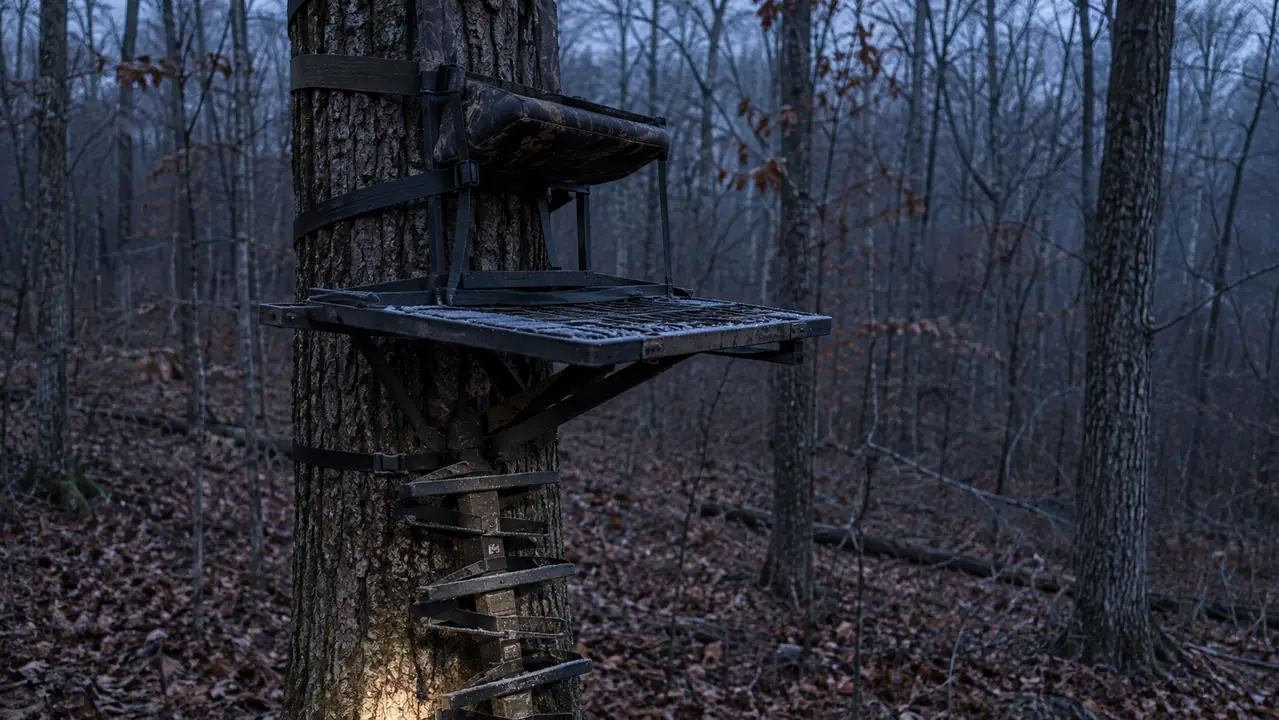
Danny hung his first hang-on stand with a lineman belt and nothing else. I watched from the truck with my hands in my pockets and kept my mouth shut, because there is a version of me that is a father-in-law and a version of me that is a safety man, and those two were not agreeing that morning. He got the stand up in about twenty minutes. He also spent most of those twenty minutes leaning back off a red oak with both hands full of ratchet strap and one belt between him and the ground.
Here is the short answer, since that is what brought you here. A lineman belt and the Hunter Safety System X-1 are not two versions of the same product. The belt is a work positioning tool. It holds your hips against the tree so you can use both hands. The harness is fall arrest. It is the thing that catches you when a stick kicks out, a weld lets go, or your boot slides off a rung with frost on it. Choosing between them is not really choosing. You need the second one, and the first one is a helper.
I am not guessing about any of this. I spent most of a career as an electrical lineman and wore a body belt on poles in weather that would send a smarter man back to the truck. I know what a belt does. It holds you in place so you can work. What it does not do is catch a fall. Now I hunt whitetail off a ladder stand and a hang-on on my late father's sixty acres, Danny comes along, and this is a conversation we have had twice in the driveway. Below is what each tool does well, and where each one will hurt you if you ask it to do the other one's job.
| Hunter Safety System X-1 | Lineman Belt | |
|---|---|---|
| The job it does | Arrests a fall, then holds you while you get your feet back under you | Positions you against the trunk so both hands are free to work |
| Fall arrest | Full harness with a tree strap and a suspension relief strap in the box | None. A belt around a trunk is work positioning, not fall protection |
| Hands free at height | Works, but you hang off the tether instead of sitting back into it | Built for it. Lean back and put both hands on the work |
| Comfort on a three hour sit | Slim padded straps, two pounds, cut to layer under a jacket | Fine standing at a trunk, awkward when you are sitting still and waiting |
| Weight and bulk on the walk in | Two pounds in the small/medium | Usually two to three pounds with the padding and rings, and bulkier to carry |
| Fit over late season layers | Slim fit, and the small/medium is listed at a 175 pound maximum, so bigger frames need the other size | One strap around the waist adjusts over bibs and a parka without an argument |
| After the fall | Ships with a suspension relief strap, the piece most people never take out of the package | Nothing to relieve. It was never holding you off the ground |
| Best for | The whole climb, the sit and the hang, every trip out | Hanging stands and setting sticks, worn over a harness, never instead of one |
Where Hunter Safety System X-1 Wins
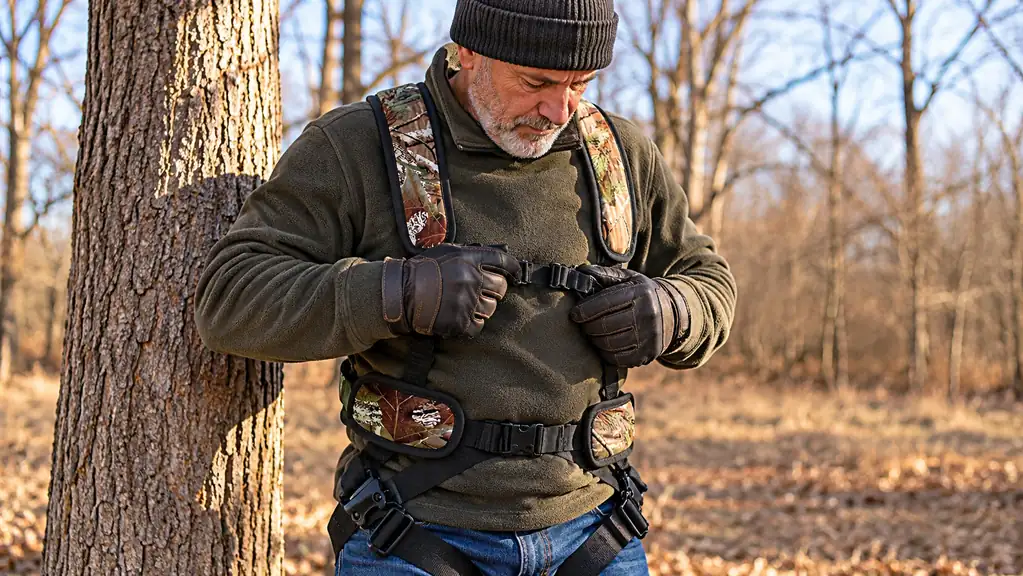
The X-1 is a full harness, and that is the entire argument. It goes on at the truck, not at the base of the tree, and it stays on until your boots are flat on the ground again. The package includes a tree strap that goes around the trunk and a suspension relief strap. That second piece is what you deploy after a fall has stopped, to take the weight off your legs while you wait for help or work your way down. Most people leave it in the bag and never look at it again. Take it out in the garage this week and hold it in your hands, because the worst time to read instructions is while hanging from a tether.
It weighs two pounds in the small/medium. The shell is a blend, mostly polyester with EVA and some neoprene in the padding, and the fit is cut slim so it sits under a jacket instead of wrestling with one. Two pounds walks into the woods without you noticing it, and that matters more than the spec sheet suggests. The harness you wear is worth more than the better harness you left hanging in the barn. I have watched men buy good gear and then quit wearing it because it was hot, or loud, or bulky under a coat, and gear you do not wear is gear you do not own. Hunter Safety System built this one light enough that there is no good excuse at the tailgate.
Opening week two seasons back it was nineteen degrees when I pulled into the lot, and I put the X-1 on over a base layer and a wool shirt in the dark cab of the truck with the dome light on and the heater clicking. Then I walked the quarter mile up the old logging road to the ladder stand and never once heard a buckle rattle against the tree. That is the whole test for me now. If the harness announces itself on the walk in, it stays home, and a harness that stays home has never caught anybody.
Where a Lineman Belt Wins
A belt does one thing better than a harness, and it is a real thing. It lets you lean back away from the trunk and put both hands on the work. Setting climbing sticks, hanging a stand, cinching a ratchet strap at head height, all of that goes faster and cleaner with a belt holding your hips to the tree. On a harness alone you hang from the tether, which pulls you upright and pins your shoulders into the bark, and you end up working one handed while the other hand holds you off the trunk. Danny hung that stand in twenty minutes with a belt. Doing the same job in a harness alone takes him closer to forty, and he is in a worse mood at the end of it.
He and I set that hang-on on a Saturday in August, ninety degrees, deer flies bad, and the belt was the only reason it went up in one trip. He leaned back into it, both hands on the drill and the strap, and the stand sat level on the first try. In a harness alone he would have hung there fighting it while I stood at the bottom offering advice I do not enjoy giving. That is the belt earning its place in the truck.
The second place a belt wins is fit over late season clothing. A belt adjusts to whatever you are wearing because it is a single strap around a waist. A slim cut harness has to go over the same bibs and parka, and it does not always do that politely. If you are a bigger man, or you sit in deep cold with a lot of layers, settle the size question before you buy anything. Here is the plain version of what I tell Danny. I wore a body belt on poles for most of a career, and I still would not climb a tree at five in the morning with one as my only attachment. A pole is a controlled climb in daylight with a crew on the ground. A frosty ladder stick in the dark is not the same job.
Wear the thing that catches you, then let the belt do the work
The Hunter Safety System X-1 ships with a tree strap and a suspension relief strap, weighs two pounds, and goes on at the truck instead of at the trunk. The small/medium is listed at a 175 pound maximum, so check the size before you climb.
Amazon Check Today's Price on Amazon →The Numbers on the Tag
The small/medium X-1 is listed at a 175 pound maximum weight capacity. That is a rating, not a suggestion, and it counts you plus boots plus a heavy jacket plus whatever is in your pockets. If you are anywhere near that line, go up a size or call the company before you climb. A harness that does not fit right is worse than no plan at all, because it puts the load where your body cannot take it. This is the single number I would check first, ahead of fabric, weight or anything else on the page.
The listing also says two different things about the warranty. One part of the page says five years, and the bullet point says a one year limited warranty. I would not buy on either number. I would ask the company directly and get the answer in an email, because a harness is one of the few pieces of gear where the paperwork actually matters after a fall. Not the price, not the camo pattern. The paperwork.
Once a season I take mine out to the garage under a trouble light and run the straps through my hands an inch at a time, looking for the fuzzy white line that means a stitch is giving up and the faded patches that mean sun. Two seasons ago I found a nick in the tree strap where a ratchet had chewed it, right where the webbing folds back on itself. I replaced the strap. It cost less than a tank of gas and I slept fine, which is more than I can say for the year I did not look.
Care is simpler than people make it. Hand wash only, which means a bucket of mild soap and a rinse in the yard, not the washing machine and not the dryer. Heat and detergent wear out webbing faster than weather does. Hang it to dry out of the sun and store it loose, not crammed into a bucket with the ratchet straps. Look the straps over once a season for fraying, sun fading or a stitch line that has gone fuzzy, and retire it if you find any of that.
The Setup I'd Actually Run
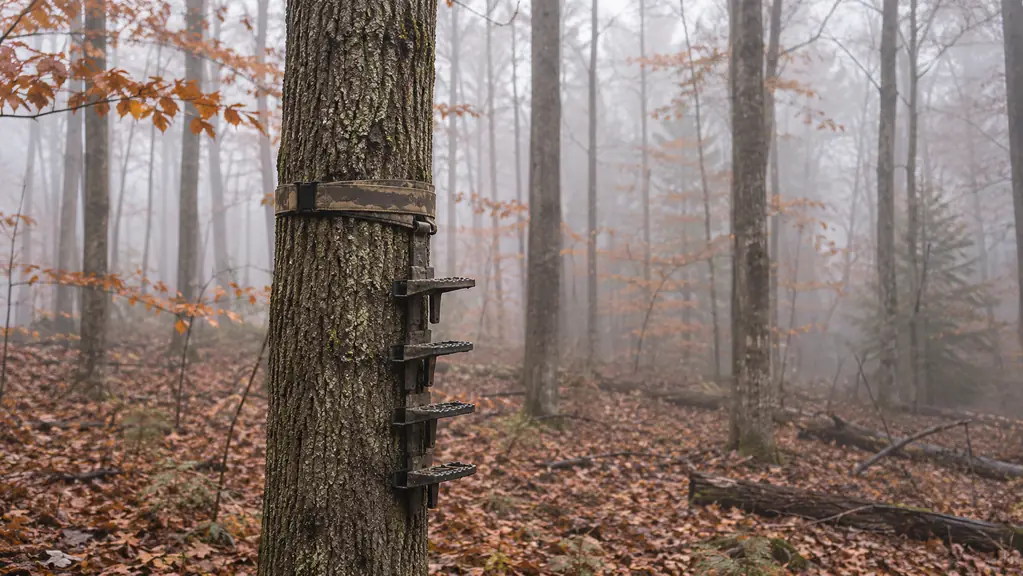
The harness goes on in the truck bed and stays on for the walk in. At the tree, the tree strap goes around the trunk at a height that leaves you sitting, not hanging, once you are on the platform. Then the belt goes around the trunk as a second attachment, over the harness, and only for the minutes when you need both hands. Hang the stand, set the sticks, cinch everything down, then come back to the harness as your only connection and climb. Two attachments at the trunk is not clutter. It is the difference between working and holding on.
Time it once and you will know. From the truck to the top of the sticks is about twelve minutes for me at fifty-eight years old with a knee that complains, and that includes stopping twice to breathe and once to check that the tree strap sits where I want it. The belt adds maybe four of those minutes at the trunk. What it does not add is the part where you are forty minutes into a hang, your forearms are done, and you start making decisions you would not make with both feet on the ground.
That is what Danny runs now, and it cost him one belt and about ten extra minutes per setup. He puts the harness on before he leaves the truck, clips the belt on at the trunk, and takes the belt off before he climbs down. One more habit worth building: hang the suspension relief strap where you can reach it from the stand, not buried in a pocket. You will not be digging through layers with your legs going numb.
A belt around a trunk is work positioning. It has never claimed to catch a fall, and it will not start today because you are running late.
One more thing, and then I will get off it. Practice the part you hope never happens. Step into the harness in the yard, hang from the tree strap at knee height off the ground, and feel where the straps sit and how fast your legs start to complain. Two minutes of that teaches more than any article, including this one. The Hunter Safety System X-1 gives you the parts to do it. The practice is on you.
What I Liked
- Full harness with a tree strap and a suspension relief strap in the package
- Two pounds and a slim cut that layers under a jacket without bunching
- Goes on at the truck, which removes the excuse at the base of the tree
- Padded blend fabric with EVA and neoprene where it presses on you
Where It Falls Short
- Small/medium is listed at a 175 pound maximum, so bigger frames need the other size
- The slim fit fights heavy late season layers
- Hand wash only, so no machine and no dryer
- The page lists two different warranty lengths
Who Should Buy Which
If you climb anything at all, a ladder stand, a hang-on, a set of sticks, buy the harness first and consider the belt later. That is the order that keeps you alive. The X-1 makes sense if you want a light system that goes on at the truck, if you are under the 175 pound small/medium rating, and if you want the tree strap and suspension relief strap in the same box instead of chasing parts. Then add a lineman belt as a second attachment if you hang stands or set sticks more than once a season, because that is where a belt earns its keep.
If you are over the rating on the small/medium, look at the larger size before you look at anything else, and if you only hunt turkey out of a ground blind, you do not need either one for that. Say so out loud before somebody sells you gear you will not wear. The right answer for a lot of people is one harness, one belt, and a Saturday in the yard learning how both of them feel.
Twenty minutes saved hanging a stand is not worth twenty feet
Start with the harness and add the belt when the work calls for two free hands. The Hunter Safety System X-1 lists a tree strap and a suspension relief strap in the box, and the rest is a bucket of soap, a season of looking the straps over, and some practice before opening day.
Amazon Check Today's Price on Amazon →