
The two numbers that decide whether this harness is right for you are printed in the same small block of type as the care instructions: Small/Medium, and 175 pounds. I have hunted out of the Hunter Safety System X-1 for two archery seasons and one rifle season, and every good thing and every complaint I have about it comes back to those two figures.
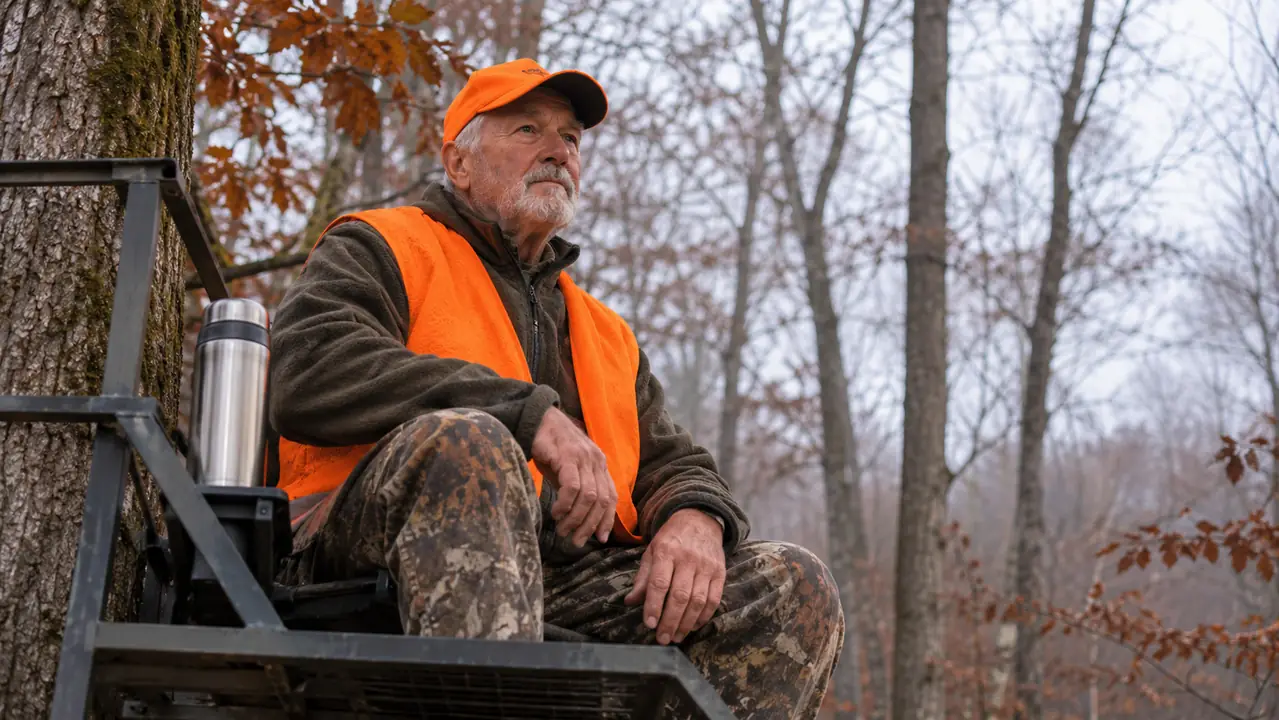
I am 58, retired out of the line trade, and I hunt a 60 acre wood lot outside Coudersport that my father left me, plus whatever state game land the deer push me onto when the pressure gets heavy. I am not a big man and I am not a young one. That is where this review comes from. Not a guy hanging off a rock face, not a guy in a warehouse with a clipboard. A guy who climbs into a tree in the dark, sits still for four hours in November, and would like to come down the same way he went up.
The Quick Verdict
Light, quiet, and easy to forget you have on, as long as you are inside the size and weight it was built for. Outside those numbers, no amount of strap adjusting will save you.
Amazon Check Today's Price →Measure Yourself Before You Measure the Harness
The X-1 comes in Small/Medium and is rated to 175 pounds. If that is you, it is one of the quieter harnesses you can strap on. Read the size chart on the listing first, because this is not a piece of gear you can fudge.
Amazon Check Today's Price on Amazon →What the X-1 Actually Is
Hunter Safety System built this one with bow season in mind, which in practice means it is made to sit quiet and stay out of the way of a draw. On the scale it comes in at 2 pounds. The shell is a blend, mostly polyester, with EVA and neoprene worked into the padding, and the listing describes the fit as slim. Care instructions say hand wash only. Remember that part, because I did not.
In the box you get the harness, a tree strap, and a suspension relief strap. That is the whole kit, and it is worth saying plainly because a lot of buyers assume there is more in there. There is no lineman's belt in the package. If you hang stands or climb sticks, you need one, and you will be buying it separately.
Mine came in the camouflage pattern the listing shows. After two seasons of riding in the back of a truck and hanging in a hemlock, the shoulders have gone a little pale and the webbing has picked up sap I have not fully gotten out. That is not a defect. That is what happens to anything you actually use instead of admire.
The other thing worth knowing before you order is that this variant is Small/Medium only. There is no Large in the X-1 line at this listing, and there is no adjustability built in that will stretch a Small/Medium into something bigger. What you get is one harness sized for one range of bodies, and the fit type is listed as slim on top of that. I measured my chest and my waist with a cloth tape before I ordered, wrote the numbers on the back of an envelope, and left the envelope on the truck dash for a week while I decided. That envelope is why I am not writing a review about a harness that does not fit.
How I've Used It
Most of my sits come out of a hang-on stand on the north edge of the wood lot, maybe 16 feet up a red oak. I put the harness on at the truck, walk in with it, and climb with it. My other setup is a ladder stand on the south side where the ground lays flatter. I have also worn it in a ground blind during turkey season, which is not what it is for, but it is comfortable enough that I quit taking it off between setups.
The walk in is where a heavy harness shows itself. Two pounds does not sound like much until you set it next to the stiff, heavy rigs I wore twenty years ago. I notice the X-1 about as much as I notice my jacket. Less, actually, because a jacket does not adjust.
The first season I ran it exactly as it came out of the box, which was a mistake I make about once a decade. The straps were set for a man shaped like the fellow in the catalog photo. I spent a whole October sit fighting the shoulder straps before I sat down and read the adjustment directions in the truck. Once I set it to my own frame the whole thing changed. That is not a knock on the harness. That is a knock on me.
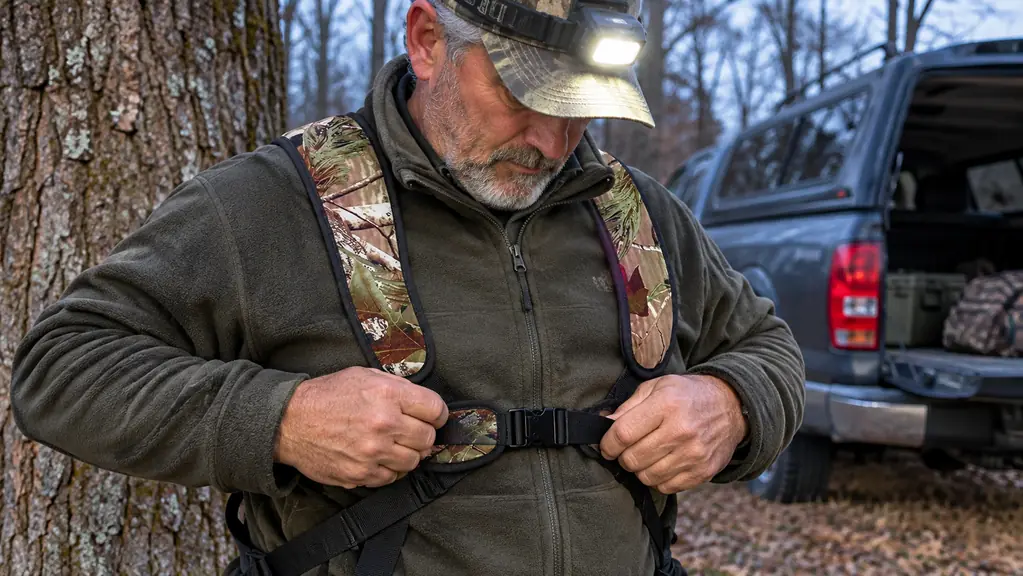
My routine now is the same every trip, and it takes about four minutes at the tailgate. Boots on, harness on over the jacket, chest strap snugged, leg straps snugged, then a two finger check under each one so I know I am not choking myself or leaving slack. Then I clip the tree strap, walk to the stand, and clip again at the bottom of the ladder before I put a hand on the first rung. Danny laughs at me for the double clip. I have been doing this work long enough to know that the day you skip the second clip is the day you wish you had not.
The 175 Pound Rating Is the Real Story
Here is what I would tell a friend at the tailgate before he orders one. This X-1 in Small/Medium carries a maximum weight capacity of 175 pounds. That number is not a suggestion and it is not a starting point you can argue with. It is the ceiling the manufacturer rated the harness to, and in my book it counts everything: you, your clothes, your boots, your pack, your rangefinder, and the coffee in your thermos.
I am under that line with room to spare, which is why I can wear this harness and recommend it to men built like me. My son-in-law Danny is 6 foot 1 and around 210, and he cannot. He tried mine on once in the driveway, got the leg straps snug, and we both looked at each other and laughed. There was no adjustment that was going to fix it. He needs a larger size and he needs a harness rated above his own weight, and that is the end of the conversation.
Put the layers on the scale and the math gets less comfortable. My September setup, a light shirt and thin pants and my boots, runs maybe 188 pounds with me in it. Add long underwear, a wool shirt, insulated bibs, a parka, and a pair of cold weather boots and I am carrying a good deal more than that up the ladder. That is the number I would actually weigh, not the number from a doctor's scale in July. If you do the same arithmetic and you are close to the line in November, you are over the line, and no harness is worth pretending otherwise.
The slim fit matters almost as much. Slim is a good thing under a light jacket in October. In late November, with base layers, a wool shirt, and a parka on, the same harness has less room to sit over. It still works. It just takes another minute of adjusting at the base of the tree, and if you are the kind of man who skips that minute, you will feel it by hour two.
Comfort on a Four Hour Sit
Padding is where cheap harnesses give themselves away. The EVA and neoprene in this one sits where my weight actually goes, over the shoulders and across the back of the legs. I have sat from first light to 10 a.m. without the deep ache I used to get across the tops of my shoulders. That alone is worth the upgrade if you are coming off older gear.
The other half of comfort is quiet. A harness that creaks when you shift is a harness that costs you deer. This one does not creak. The webbing is soft enough that it folds instead of snapping when you turn, and there is nothing hanging off it to bang against a stand rail. I drew on a doe at 22 yards with it on and she never looked at the harness. She looked at me, but that is a different problem and it is not the harness's fault.
Cold changes things a little. The neoprene does not go stiff the way some padding does, but the straps still take a set overnight in a cold truck. I bring mine inside the night before a December hunt and hang it off a nail in the garage. That is a habit, not a complaint, and it costs me nothing.
One more note on a long sit, and this is the part I did not expect. The slim cut means there is no bulk behind the shoulder blades, so I can lean back against the tree with the harness on and the seat pad under me and not feel like I am sitting on a rolled up rug. On the second Saturday of rifle season two years back I sat from a half hour before legal light until quarter past ten, which is the longest I have stayed put in years. When I stood up my legs complained, but my shoulders did not, and the harness was not the reason I quit.
A 2 pound harness rated to 175 pounds is either exactly right for you or exactly wrong, and the difference is on the tag, not in the reviews.
Where It Gets Annoying
Hand wash only. I want to be clear about that because I ignored it. I ran mine through a front loader on a gentle cycle after a muddy November and the padding came out looking tired in a way it had not looked before. Read the care tag. A bucket of cool water and a little dish soap, hang it in the garage, done in an afternoon.
What actually happened is that the padding bunched at the shoulder seams and did not lay flat again. It was not ruined, and I still hunt in it, but there is a wrinkle on the left shoulder now that was not there before and I feel it about hour three. Learn from a man who should have known better. Thirty minutes with a bucket beats an afternoon of annoyance every single season you own the thing.
The warranty language on the listing is confusing and I will say so straight. The product attributes say 5 year warranty. The listing bullet says 1 year manufacturer's limited warranty. Both cannot be right, and I have not needed to test either one. If the warranty matters to your decision, call Hunter Safety System before you order and get the answer in writing. I am not going to pretend I know which number applies to your purchase.
The kit is bare. Tree strap, suspension relief strap, and that is the lot. There is no pouch on it and nothing spare in the box. If you carry a rangefinder, a grunt tube, and a folding saw, that weight lives on your pack or in your pockets.
And the ladder climb is where I notice the missing lineman's belt most. Going up a ladder with a tree strap, you are tethered but you are tethered to one point. On sticks or a hang-on, a belt around the tree is the thing that keeps you from swinging out. That is separate gear and separate money, and if you climb anything other than a ladder, it belongs in the same order.
What Nobody Tells You About the Suspension Relief Strap
The suspension relief strap is the piece everyone ignores until the day they need it. It is a loop you step into after a fall so you can get the weight off your legs and keep blood moving while you wait for help. The reason it matters is simple. Hanging motionless in a harness after a fall can put a man in serious trouble in a lot less time than most people assume.
Practice with it at knee height before you ever need it. I clipped mine where I could reach it with either hand and made Danny do the same with his setup. We stood in the driveway, stepped into the loop with both feet on the ground, and talked through what we would do if either of us ended up hanging. It took ten minutes. It is the best ten minutes I have spent on hunting gear in years.
The First Week Is the Worst Week
New webbing is stiff webbing, and stiff webbing does not sit where you put it. For the first few climbs the shoulder straps wanted to ride up and the leg straps wanted to loosen on the walk in. That settled down after maybe six or seven trips. If you judge this harness on one afternoon in the yard, you will judge it wrong.
What I do now, and what I would do with any harness, is set every strap at the base of the tree, then take a paint pen and mark the webbing where the adjuster sits. Once those marks are on, putting it on in the dark takes twenty seconds and I am not guessing at the fit with cold hands. Do that after the break-in period, not before, or you will be marking the wrong spot.
The break-in did not happen on a schedule for me, it happened on the walk. Six or seven trips of a quarter mile through the timber, in and out, and by the time the rut rolled around the webbing had taken my shape instead of the shape of the box it shipped in. If you are hunting a short walk to a ladder stand, plan on it taking a couple more trips than I needed, because my walk is doing some of that work for me.
What I Liked
- Light at 2 pounds, easy to forget you have it on during the walk in
- Quiet webbing that does not creak when you shift on the stand
- Padding sits where the weight actually goes on a long sit
- Ships with a tree strap and a suspension relief strap
- Slim cut stays clear of a bow draw
Where It Falls Short
- Rated to 175 pounds, which rules out a lot of grown men
- Small/Medium only in this variant, and the cut runs slim
- No lineman's belt included, so climbing sticks costs extra
- Hand wash only, and I learned that the hard way
- Warranty listing contradicts itself between 5 year and 1 year
Who This Is For
This is for the smaller framed archery hunter who sits a ladder stand or a hang-on and wants something light, quiet, and clear of the bow string. If you are under 175 pounds dressed, if a Small/Medium fits your frame, and if you climb in the dark and sit still for hours, the X-1 does its job without asking anything of you. It is also a sensible first real harness for a younger hunter who is not done filling out, provided the weight rating is respected and somebody checks the fit before he leaves the ground.
And it is for the man who has been wearing the same stiff harness for fifteen years and does not know how much better they have gotten. That was me. I did not realize how much I was fighting my old gear until I stopped fighting it.
Who Should Skip It
Skip it if you are over 175 pounds dressed. Full stop, no workaround. Skip it if you take a Large or bigger in a jacket. Skip it if you climb sticks or hang stands and you are not planning to buy a lineman's belt, because this kit will not cover that. And skip it if you want one harness that fits you and your son-in-law both, because this one is sized for a person, not a family.
I would also tell a brand new hunter to size up if the tape puts him anywhere near the line, because November layers add up fast and a harness that is tight over a parka is a harness that ends up hanging in the garage. That is not a knock on Hunter Safety System. That is how sizing works on every harness anybody makes.
If the Numbers Fit, This One Earns Its Place
Two pounds, quiet webbing, and a rating that tells you the truth up front instead of after the season. Check the size and weight chart, then check today's price.
Amazon Check Today's Price on Amazon →