
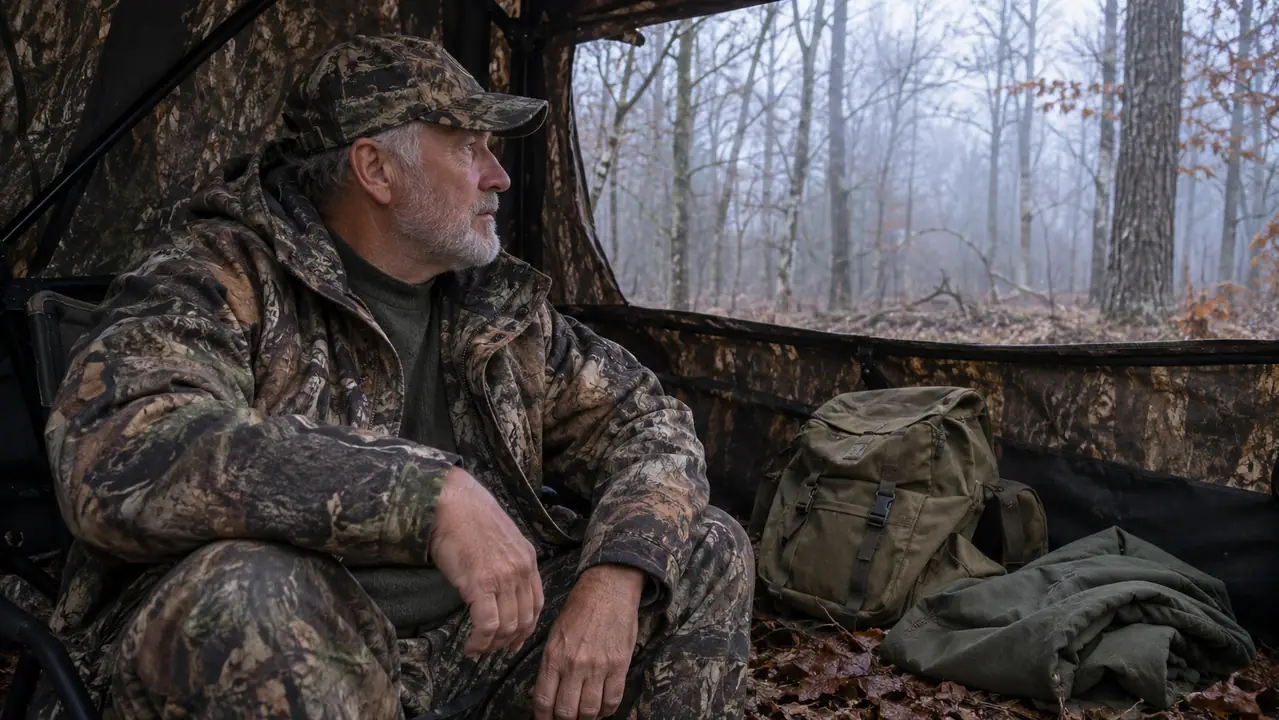
A doe walked in behind me on the second Saturday of archery season, stood at eleven yards, and put her nose up. I was wearing a jacket I had sprayed with Wildlife Research Center Scent Killer two evenings earlier and hung in the truck cap overnight. She never blew. She fed through the edge of the oaks, and about twenty minutes later a small buck followed her track. That is not proof of anything except that one deer on one morning did not smell me. But it is why a bottle of this stuff lives behind the seat from October into December, and after a full season of carrying it around I have opinions about where it helps and where it flat does not.
I have tried the other routes. Scent free detergent, the unscented soap, the charcoal suit that cost more than my first bow, the cover scent wafers, the ozone box humming in the garage. Some of them work a little. Most of them work less than the fella selling them says they do. What I want is something I can put on the gear I already own, at the tailgate, that does not leave me smelling like a pine tree air freshener. Wildlife Research Center sells exactly that in a plain bottle, and it has been the most consistent piece of my routine for a while now.
The Quick Verdict
The one scent product I restock every single year. It will not beat a bad wind, but it buys me minutes on the mornings when the wind is only half right.
Amazon Check Today's Price →The Bottle That Rides Behind My Seat From October to December
The 48 ounce combo is a 24 ounce field bottle plus a 24 ounce refill, which is the version I buy so I am never dry in the middle of the season. Check today's price on Amazon before the archery opener sneaks up on you.
Amazon Check Today's Price on Amazon →How I've Used It
My routine has not changed much in the years I have been doing this. I hunt a 60 acre wood lot that was my father's, plus a couple of state game land tracts when the pressure pushes me off the home ground. There is a ladder stand on the north edge and a hang on stand over a saddle the deer cross going to the corn. My son in law Danny hunts with me most of rifle season. The gear that gets sprayed is the same list every time: base layer, outer jacket, pants, gloves, knit cap, face mask, and the pack I carry. The boots get hit too, though I wear rubber boots and I think that matters more than any spray ever will.
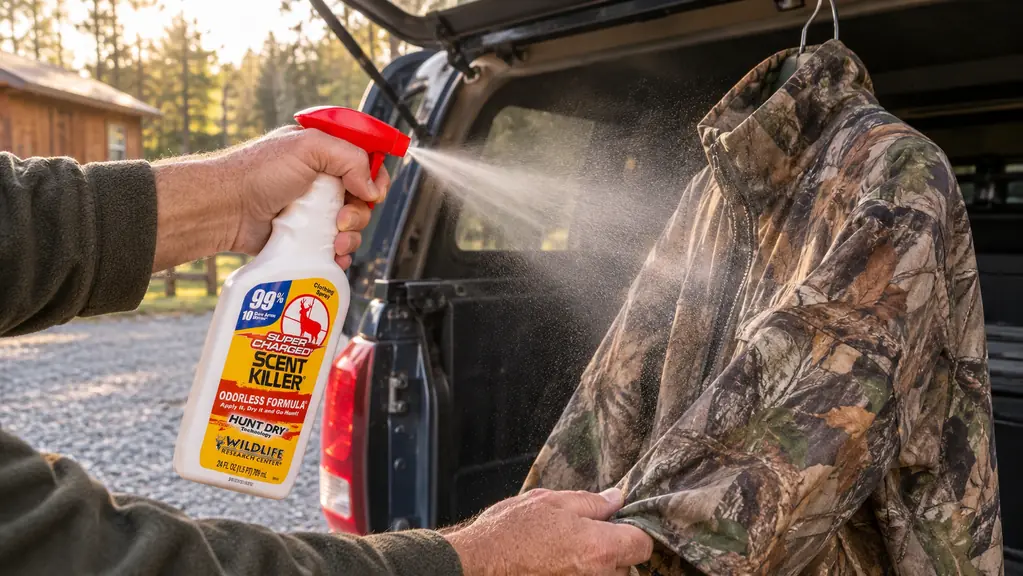
The way I do it is spray everything the evening before, both sides, until the fabric is damp but not soaked, then hang it in the cap to dry with the windows cracked. Spray in the morning and walk in wearing something wet and you are carrying moisture and whatever the carrier smells like straight into the stand with you. Letting it dry overnight is the entire point of a product that claims to keep working after it dries. If I am hunting an evening sit, I spray at noon and hang it on the porch rail.
One 24 ounce bottle carried me from the October archery opener through most of November. That is spraying a full set of clothes and a pack roughly twice a week, plus a touch up on the walk in when the afternoons were still warm. The second bottle is the refill, and I have never had to open it before the first one was empty. The combo is the only version of this that makes sense to me, because the one thing worse than running out in week three is driving around a strange town on a Saturday morning in November looking for a replacement.
What Hunt-Dry Actually Means When the Jacket Is Dry
The claim on the label is the part that made me try it in the first place. The bottle says Hunt Dry Technology, and the company says the formula was found to be 99 percent effective at stopping replicated human odor ten days after drying in testing at Rutgers University. Ten days after drying is a long stretch of time. A lot of sprays work while they are wet and quit working about the time the fabric starts to feel dry on the hanger.
What I can tell you from my side of it is that a jacket sprayed on a Sunday and worn the following Saturday did not seem any different to me than one sprayed the night before. I have no way to measure that with my nose, and I am not a laboratory. But the ten day figure is the reason I stopped worrying about re spraying before every single sit, and stopped carrying a bottle up the tree with me, which I did for two seasons and which is one more piece of gear to clank against a stand at the wrong moment.
Replicated human odor in a lab is not the same animal as a live doe circling downwind of a real man who had eggs for breakfast. The study tells you the chemistry holds up over time. It does not tell you that a four year old doe with a nose that has kept her alive through four hunting seasons is going to walk past you in the open. Nothing tells you that. Anybody who promises it is selling you something else along with the spray.
Where It Falls Short
The stuff has a smell of its own while it is wet. It is not a cover scent and it does not pretend to be one, and as far as I can tell it fades to nothing as it dries. But if you soak a jacket in the driveway and climb into a blind ten minutes later, you are carrying that smell in with you along with the damp. That is user error, not a product flaw, and I have made it more than once when I was running late.
Scent control is a stack of habits, not a single bottle. Shower before you go. Keep your hunting clothes in a tote and not on the hook by the woodstove. Wear rubber boots and do not walk through the yard where the dog has been. Play the wind like it is the only thing that matters, because it mostly is. Spray is one card in that deck. I have had deer blow at me while wearing it, and every single one of those was a wind mistake on my part, not a spray failure.
Danny sweats. He is in his thirties and he walks in like the truck is on fire. On a warm October afternoon he can soak a shirt through before he is a hundred yards off the gate, and once you are wet with sweat, the spray on the outside of that shirt is not doing what it did on the hanger. The fix for him was a slower walk and a decent base layer, not more spray. No bottle on the market gets around a man who is damp with his own sweat.
It also does nothing for your breath, for the boots you wore to the gas station, or for the coffee cup sitting in the console. Those things are on you. If you are smoking in the truck on the way in, you can spray until the bottle is empty and a two year old doe will still pick you apart at forty yards.
Three Sits I Remember From This Season
The first was a late October evening on the hang on stand, wind out of the northwest, does filtering down the saddle toward the corn. I had sprayed that morning around eleven and hung the jacket on the porch rail to dry before I loaded up. Six does fed past between fifteen and twenty five yards. Two of them looked up at me and went back to eating. Not one blew. There is nothing dramatic in that story, and that is exactly the point. A quiet sit is the product working.
The second was a cold Saturday in rifle season with Danny, and I am not going to tell you the spray saved that hunt, because it did not. We were in the ground blind in a little hollow that swirls, and a young doe came in behind us and got nervous at about twenty yards and blew out of there. The wind turned in that bowl, the way it always does, and the whole setup was wrong before either of us got dressed. No bottle fixes a swirl. I knew that going in and I went anyway.
The third was a morning I flat forgot. I pulled on the base layer I had worn the day before, unsprayed, because it was still in the truck and I was running behind. I saw nothing that morning, which proves nothing either way. That is the honest shape of scent control. You do everything right and see nothing, or you slip and nothing happens, and you never once get a clean answer about which thing made the difference. So you control the variables you can control cheaply, and you let the rest go.
The Rest of the Stack
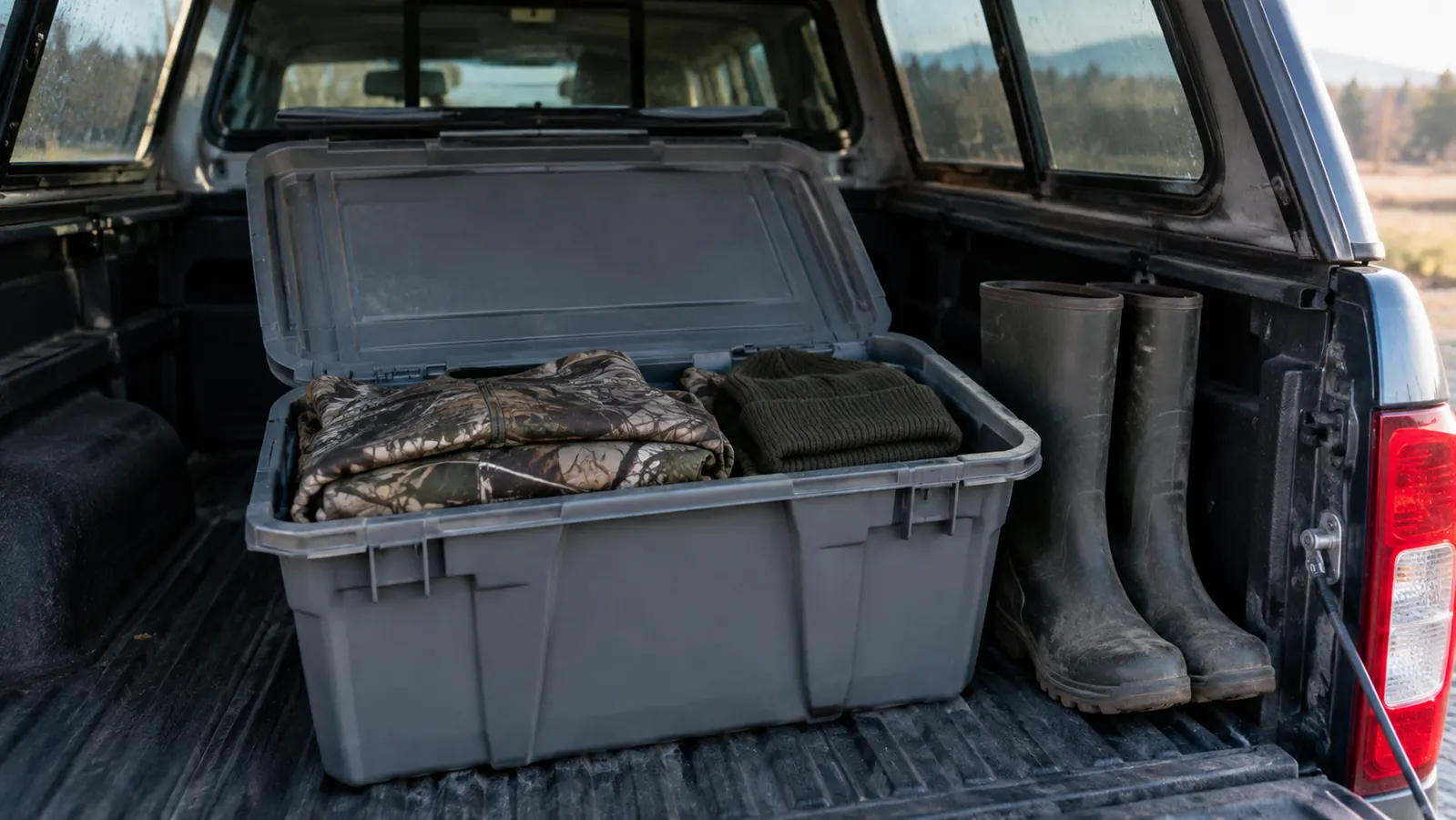
Around the Wildlife Research Center bottle, this is what the routine looks like. I shower before I leave the house with an unscented bar soap, not the good smelling stuff my wife buys. Hunting clothes live in a plastic tote in the bed of the F-150 under the cap, not in the house, not in the mud room, and never in the same load as the regular laundry. Rubber boots go on at the truck and the everyday boots stay in the cab. It is not complicated and it costs almost nothing except the discipline of doing it when you are half awake.
The rest is wind and entry. I get in quiet, I get in early, and I do not walk the edge of the field where the thermals dump my scent into the bedding cover at first light. On the mornings when the wind is wrong I hunt a different stand or I do not go. Anyone who tells you a spray replaces that judgment is either new at this or selling something. The spray is what covers the gaps between a good habit and a bad break.
What I Liked
- Keeps working after the fabric dries, which is the one claim I am actually paying for
- Combo pack gives you a field bottle plus a refill so you are not caught short in week three
- Goes on the gear you already own, no separate suit to buy
- Dries overnight without leaving a cover scent I can notice on the hanger
- A 24 ounce bottle lasted me roughly half a season at twice a week spraying
Where It Falls Short
- Will not save a bad wind or a sweaty walk in, and I have tested both
- Fabric has to be damp but not soaked, so there is a right way and a wrong way to do it
- Has its own smell while wet, so spraying the morning of and walking straight in is a mistake
- Does nothing for breath, boots, or the coffee cup in the console
- Easy to talk yourself into spraying more instead of fixing the wind
Ten days after drying is the number that matters. Most of these sprays quit the minute the fabric stops feeling damp.
Who This Is For
This is for the hunter who already does the boring parts and wants one more layer on top of them. You shower, you keep your clothes in a tote, you wear rubber boots, and you still get picked off now and then by a doe you never saw. Wildlife Research Center Scent Killer is a sensible next step because it goes on the gear you own, it dries overnight, and it keeps working for days after. It suits the archery hunter putting in twenty or thirty sits a season, and it suits the rifle hunter who wants the same jacket to be ready on a Tuesday night with no ceremony. If you are building a routine from nothing, this belongs in it alongside an unscented detergent and a plastic tote, not instead of them.
Who Should Skip It
Skip it if you are hunting a bad wind and hoping a bottle will cover for you. It will not, and you will blame the product instead of the setup. Skip it if you want a cover scent, because this is not one and it will not make you smell like dirt or acorns. Skip it if you are not going to let it dry, since spraying on the tailgate and walking in damp wastes both the spray and your morning. And if you are the kind of hunter who smokes in the truck, wears his boots into the kitchen, and hunts the same stand no matter which way the wind is blowing, spend the money on a wind checker and a second stand location first. The spray can wait.
Buy It Once in the Fall and Stop Thinking About It Until January
The 48 ounce combo is a working bottle plus a refill, which is how I have bought it every year since I started. Check today's price on Amazon and get it on the shelf before the archery opener, not the night before.
Amazon Check Today's Price on Amazon →