
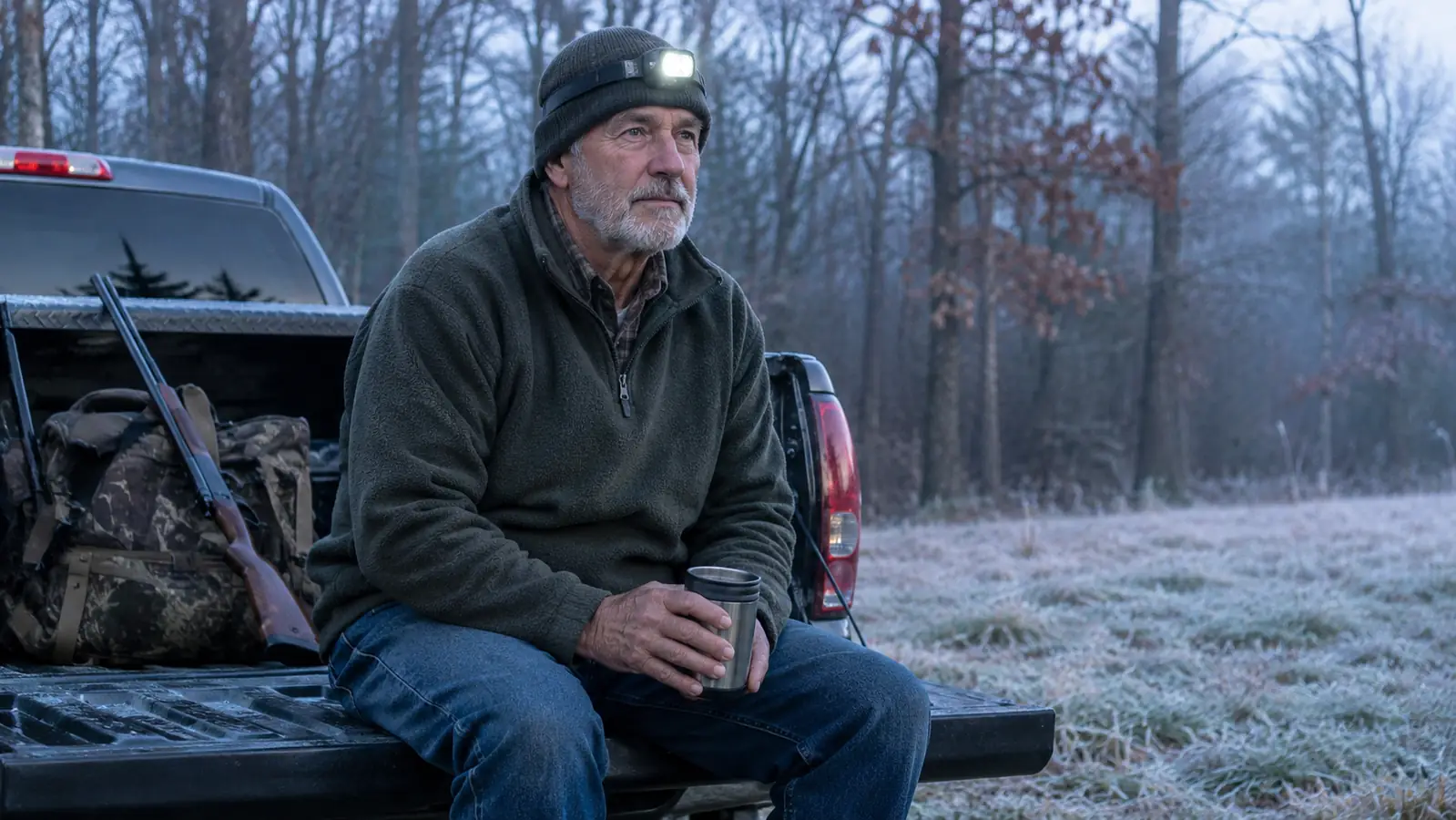
Two seasons back I put an arrow through a decent eight point about a hundred and fifty yards off the edge of the wood lot. Clean hit, short track, no drama. Then the work started. I had one folding knife in my pack, and by the time I got to the second hind quarter that blade was cutting like a butter knife on a cold plate. I finished the job with a sharpener in one hand and a headlamp in my teeth, and I burned forty minutes of good cold weather doing it.
That was the last time I dressed a deer with one blade. The next week I ordered the Mossy Oak Field Dressing Kit, the eight piece set with the carry case, and it has ridden in the truck box from October through January ever since. Not because I am an organized man. Because the kit is the only way I can keep track of four different blades and a saw without turning my pack upside down in the dark. Here is why it earns the space.
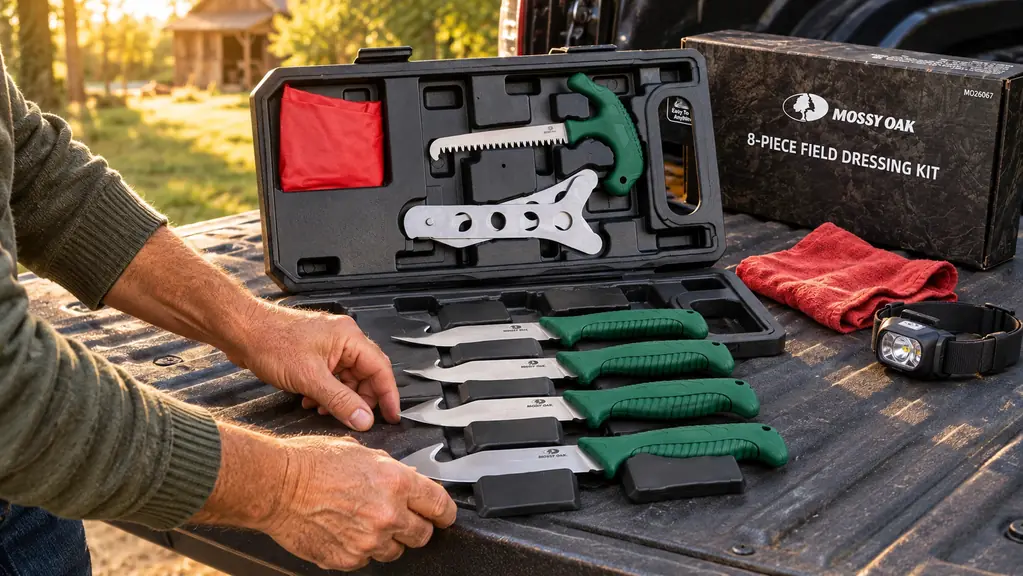
Four blades and a saw in one case, instead of one dull knife at midnight
The Mossy Oak Field Dressing Kit is the setup I hand to anyone who asks what they ought to be carrying. Stainless steel, eight pieces, one carry case, and a one year manufacturer warranty. Look at today's price before the season opens.
Amazon Check Today's Price on Amazon →One knife is not a plan
A single blade has to open a chest cavity, work around a joint, and separate meat from bone, and it does all three badly. The moment you hit bone or a patch of hair, the edge goes. Having a saw for bone and a knife for meat means you are not asking one tool to be four tools. That is the whole idea behind the Mossy Oak set, and it is the reason I quit carrying a folding knife as my only option.
The bone saw does the job a knife should never do
Splitting a pelvis or cutting through a rib cage will ruin a good edge in about thirty seconds. The 7.5 inch wood and bone saw in this kit has a blunt hooked tip on the front end, which sounds like a small detail until you have nicked a bladder in the dark and spent the rest of the night regretting it. You cut bone with the saw and keep your knives for meat. Simple division of labor.
The gut hook keeps your fingers out of the cavity
Opening a deer from sternum to pelvis is where most people cut themselves, usually because they are working blind with a straight blade and a little bit of hurry. The gut hook skinner lets you run the hook under the hide and pull, with the edge facing away from the guts and away from your hand. It is faster than a knife and it is safer, and on a cold morning with numb fingers that matters more than speed.
A caping knife makes the head work quick
If you cape anything out, or if you just want the head clean for the taxidermist, a small blade with a fine point does in two minutes what a big knife does in ten. The caping knife in the kit has a short, controllable edge that gets around ears and eyes without gouging. I used to do that work with the same blade I gutted with, and the results looked exactly like it.
The boning knife is what lets you quarter where the deer fell
On a warm day, or on a long drag, quartering the deer where it dropped is the right call. The 9.75 inch boning knife has the reach and the flex to follow a bone and separate a shoulder or a ham without chopping through it. I quartered my last two deer at the kill site and carried them out in game bags. My back appreciated it and so did the meat.
The brisket spreader holds the cavity open
The steel stick and brisket spreader is the piece people look at and shrug at, right up until the first time they use it. It props the chest open so you have both hands free and the light gets where it needs to go. Cooling a deer out is the single biggest thing you can do for the meat, and you cannot cool what you cannot reach. It weighs almost nothing sitting in the case.
The carry case is the reason it stays together
Loose knives in a pack turn into a scavenger hunt. The case holds the saw, the spreader, and the blades in their own slots, so at midnight with a headlamp you reach in and get the one you want without digging. It also means nothing sharp is rolling around against your thermos. I have had a blade work its way out of a sheath in a pack exactly once, and that was enough for me.
Stainless steel cleans up with a hose
Everything in the kit is stainless, so cleanup is hot water, a little soap, a dry cloth, and a few minutes on the tailgate. I have left this set in the truck box through freezing nights and pulled it out a week later with nothing worse than an edge to touch up. A one year manufacturer warranty backs it, which tells you something about how worried they are about rust.
It ends the drive home for a second knife
The worst version of this story is the one where you are forty minutes from the house, halfway through a deer, and your only blade is done. That drive costs you meat, daylight, and your temper, in that order. A kit that lives in the truck permanently solves the problem before it happens. Mine does not come out between October and January. It is part of the load now, same as the rope and the drag.
It makes you the guy who can actually help
Danny killed his first deer six years ago and I walked him through it with this kit laid out on the tailgate. He had a knife of his own. What he did not have was a saw, a hook, or any idea of the order of operations. Having every piece in one case means you can hand a man a job and a tool that fits it. That is worth carrying, whether you hunt alone or not.
What I'd Skip
I would skip the one good knife and nothing else school of thought, and I would skip the three knives in three separate sheaths routine that follows it. I would also skip any kit with a hollow handle or a saw that flexes when you put pressure on it, because a saw that bends is a saw that binds. What I would not skip is the case. A kit that lives loose in a pack is a kit you stop carrying by November. The Mossy Oak set stays together because everything has a place, and that is most of the value right there.
Cut bone with the saw and keep your knives for meat. That one rule has saved more edge than any sharpener I own.
The kit that lives in the truck from October to January
Eight pieces, stainless steel, one carry case, one year manufacturer warranty. If you dress your own deer, this is the setup I would hand you at the tailgate before first light. Check today's price on Amazon and have it in the truck before the opener.
Amazon Check Today's Price on Amazon →