
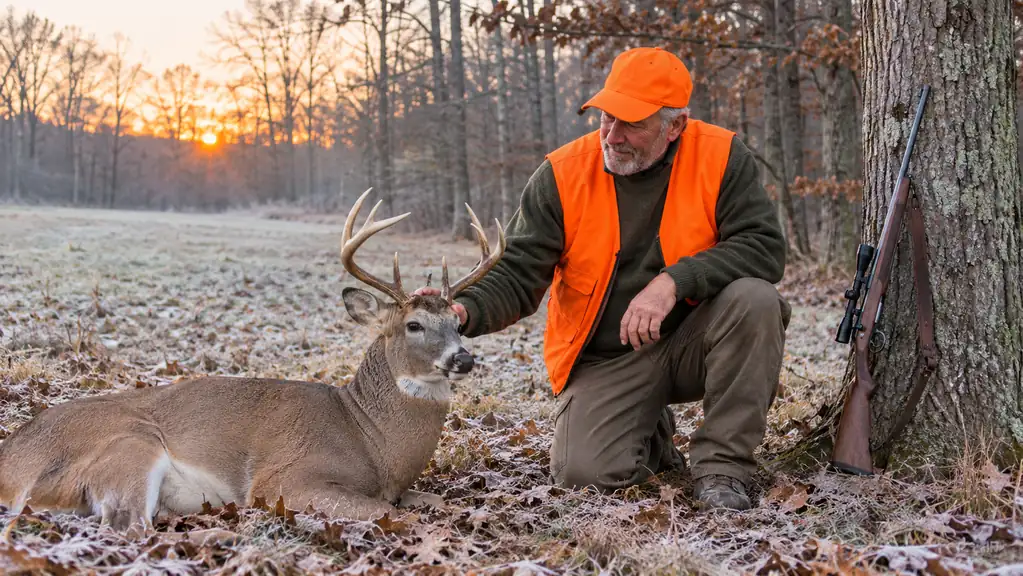
Short answer first, because you likely have a tag to fill and not much daylight. If you gut, skin, and break a deer down yourself, the Mossy Oak Field Dressing Kit does work that one good knife cannot do. If you open a deer in the field and hand it to a processor, a single sharp fixed blade is all you need, and the kit turns into extra weight on the drag.
I have hunted whitetails in Potter County for about forty seasons, and my son-in-law Danny has been at it for six. Danny is the reason I own the kit at all. He showed up at the wood lot one November with one folding knife and a lot of confidence, and by the time his doe was on the ground he was asking questions I did not have clean answers for. So I bought the Mossy Oak set, ran it through a full season, and I have opinions now. It carries 4.7 stars across more than six thousand reviews, which is close to what I would give it myself.
| Mossy Oak Field Dressing Kit | One Good Fixed Blade | |
|---|---|---|
| Tools in the set | Eight pieces: bone saw, brisket spreader, caping knife, gut hook skinner, boning knife, and the case that holds them | One blade that has to cover every cut |
| Bone work | A saw sized for pelvis and ribs, through in a few strokes | Ribs will part with a knife if you are patient and willing to dull the edge |
| Bladder and gut safety | Blunt hooked tip on the saw is built to ride past the bladder instead of punching it | A knife point has no such guard, and cold hands are not precise |
| Gut hook | Dedicated gut hook skinner for the zipper cut up the belly | Opening a belly with a knife point is a skill that takes a lot of deer to learn |
| Bulk in the pack | Case runs about sixteen inches long and the package is a bit over three pounds | A four to five inch fixed blade disappears on a belt |
| Sharpening and upkeep | Three knife edges plus saw teeth to keep up, and they dull sitting in the case | One edge, one stone, ten minutes on the tailgate |
| Edge holding | Stainless steel, forgiving and rust resistant, but it wants touching up mid season | A good knife in a better steel holds an edge longer and comes back faster |
| Warranty | One year manufacturer | Most quality fixed blades carry a lifetime warranty |
| If something goes wrong | Another blade is already in the case | Roll the edge or lose it in the leaves and your night is over |
| Best for | Hunters who skin and quarter their own deer, and the partner who shows up empty handed | A deer or two a season and a hunter who already owns a saw |
What Is Actually in the Case
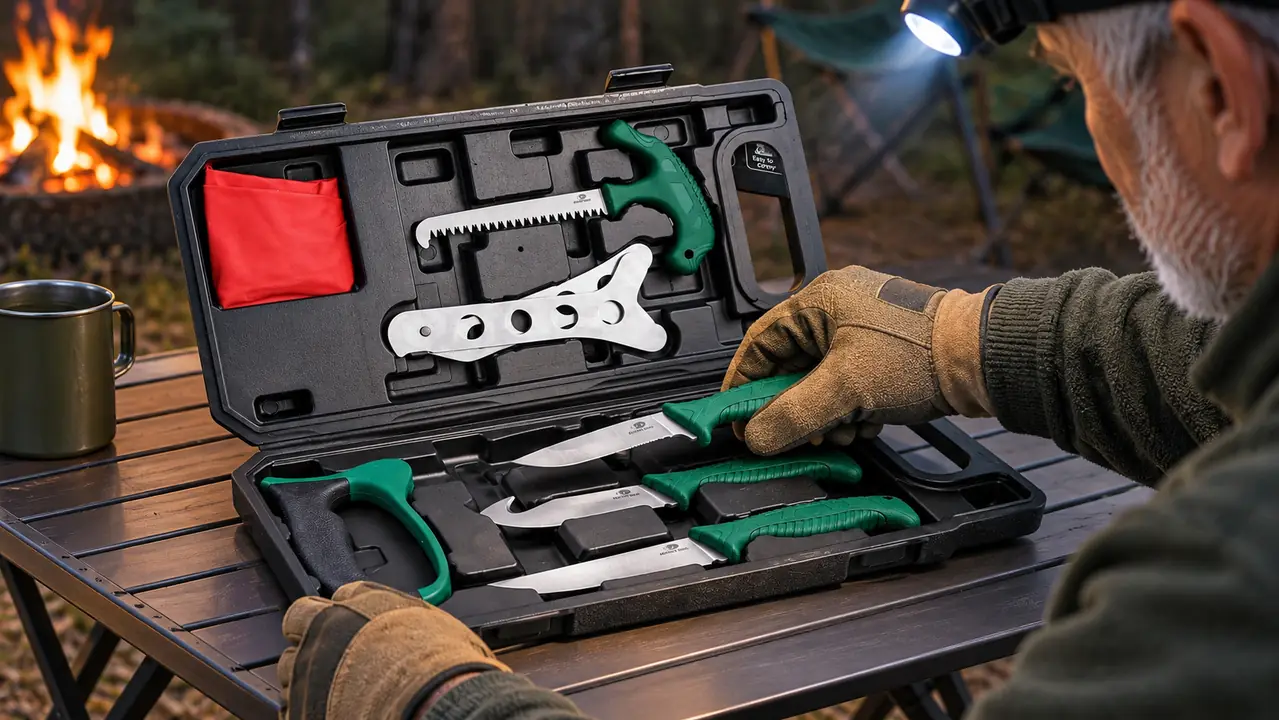
The kit is eight pieces in a hard carry case about sixteen inches long, and the whole package runs a little over three pounds. The pieces that matter to a deer hunter are the bone saw, the steel stick or brisket spreader, the caping knife, the gut hook skinner, and the boning knife. Everything is stainless steel. There is a one year manufacturer warranty, which is not generous, and I will get to that.
The saw is the piece I did not expect to care about. It has a blunt hooked tip on the nose, and that blunt nose is the entire idea. When you are opening a pelvis in the dark with cold hands and a headlamp sliding around, a pointed saw is a blade waiting to punch into the bladder. The hooked nose rides the bone instead. That one detail is why the kit stayed in my truck after the first weekend. I spent most of the 1990s cutting pelvises with a taped up hand saw blade, and I do not miss it.
The gut hook skinner handles the zipper cut up the belly without a point going where it should not. The caping knife is the fine work around the head and the thin skin at the neck. The boning knife is the one that separates meat from bone when you are actually taking the deer apart. The spreader holds the chest open while you work and keeps your fingers out of the way. None of it is exotic. It is a working set of tools in a molded case.
Where Mossy Oak Wins
The kit wins on bone, and bone is where most of the cussing happens in a November woods. A knife will part ribs if you know what you are doing, but it is slow work and it costs you the edge you need three minutes later. The saw goes through a pelvis in a handful of strokes. Same story on the rib cage when you want the chest open and the heat out. Danny and I split a heavy doe last fall and I had the pelvis open before he was halfway through the gristle with his blade. That was not skill on my part. That was a saw.
The second win is having the right edge for each cut instead of one edge compromised for all of them. Skinning a deer with a boning knife is like tightening a bolt with pliers. It works, badly, and you ruin the tool doing it. The kit hands you a thin caping blade for the neck and head, a gut hook so you are not punching a point into a full belly, and a boning knife with enough flex to follow a shoulder blade around the socket. A single knife has to split the difference at every one of those jobs. The kit does not split anything.
The third thing nobody mentions until it happens is the spare. Drop a knife in the leaves at last light, or roll an edge on a rock you did not see, and a kit still has blades in the case. With a single knife you are done, or you are driving home with an unused tag and a bad taste in your mouth. I have watched a grown man crawl a hillside on his hands and knees in the dark looking for a knife he set down for thirty seconds. He found it. He was lucky.
Where One Good Knife Wins
Weight and bulk go to the knife, and this is not a small thing no matter how the kit is marketed. Sixteen inches of hard case is a lot of pack space, and a little over three pounds is a lot of pack weight. On the wood lot I leave the kit behind the seat of the F-150 and it costs me nothing. On state game lands, walking in a mile before first light, the case stays in the truck and a fixed blade goes on my belt. A good knife disappears on your hip. The case announces itself every time you shift your pack.
Upkeep goes to the knife too, and it is not close. One edge, one stone, ten minutes on the tailgate and you are done for the season. The kit has three knife edges plus saw teeth, and every one of them needs attention, because stainless steel sitting in a foam case in a cold truck does not stay sharp on its own. Stainless is forgiving and it will not rust on you, but forgiving is not the same as sharp. A good fixed blade in a better steel holds an edge longer and comes back quicker, and most of those knives carry a lifetime warranty where the Mossy Oak kit carries one year.
There is also something to be said for knowing one tool completely. A man with a single knife learns exactly how it cuts, where the tip is at all times, and how much pressure it takes to open a belly without nicking anything inside. That feel takes years and it pays off in speed and safety. Danny had one knife for his first six seasons and he is surgical with it. Hand him a case of eight and he slows down, because now he is choosing instead of doing. New tools cost attention, and attention is the one thing you do not have spare at last light with a deer down and the temperature dropping.
The saw is the reason I stopped opening deer with one blade
Eight pieces, a blunt hooked saw tip that rides the bone instead of the bladder, and a hard case that lives behind my truck seat all season. See today's price and the full component list on Amazon.
Amazon Check Today's Price on Amazon →I had the pelvis open before Danny was halfway through the gristle. That was not skill. That was a saw.
What a Season Actually Looked Like
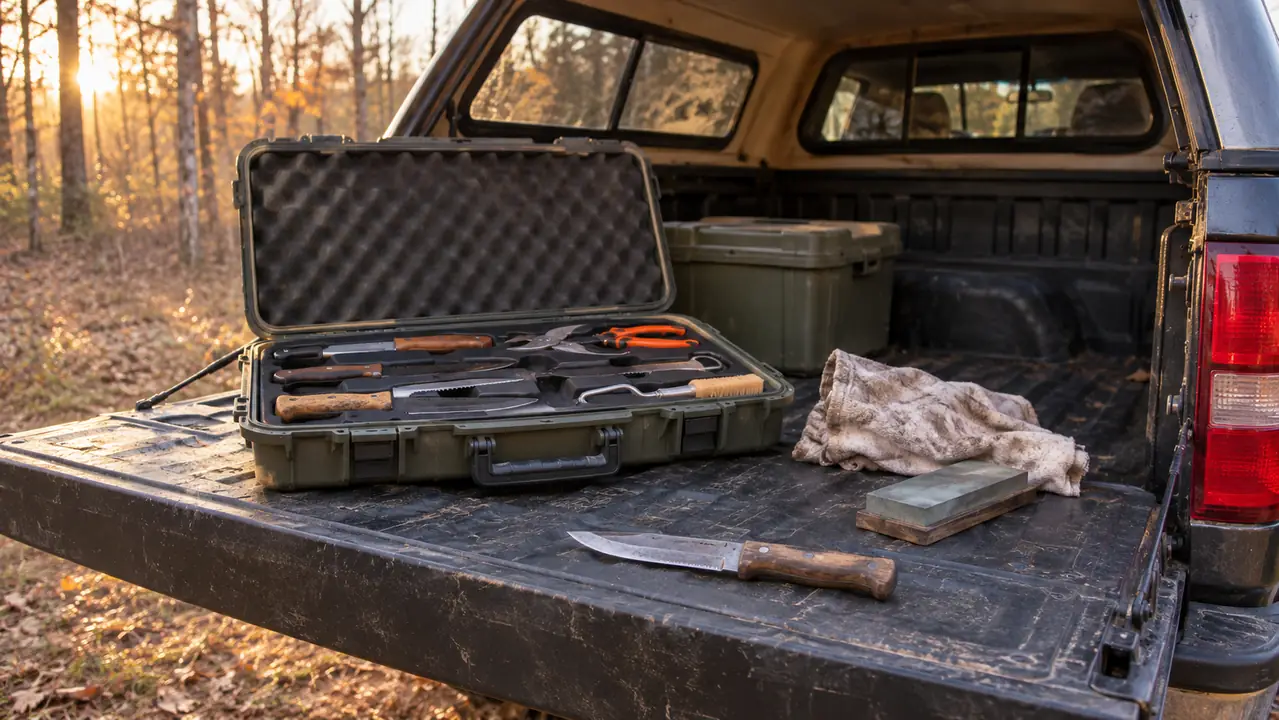
Archery season opened warm and wet, the way it usually does here. I was in the ground blind on the wood lot with the kit in the pack because I had decided to use it and nothing else until I knew it. The first deer I took was a small doe at last light on the second Saturday. Warm weather, flies working, and I wanted her opened and cooled fast. The gut hook went up the belly clean in one pass and the saw opened the pelvis in four or five strokes. I was done and washed up in the dark before the coyotes started talking. Two seasons ago that same job with a folding knife would have taken me twice as long and I would have been in a fouler mood.
Rifle season is where the kit earned a permanent spot. Danny killed a decent buck on the second Monday, a quarter mile off the lane, and we dragged him to the truck because he was too heavy to do anything else with on wet ground. Field dressed him at the tailgate under the cap light. Between the two of us we used the caping knife on the head and neck, the gut hook on the belly, the saw on the pelvis and the brisket, and the boning knife back at camp that night. Every piece got used. That is the test I care about, and most tool sets fail it.
The thing I noticed by December was the case itself. It kept everything where it belonged, which sounds like nothing until you have dug through a pack at midnight looking for a saw. The tradeoff is that the case holds moisture if you put tools away wet, so I started wiping the blades and leaving the case open overnight in the garage. Small habit. Worth mentioning.
Care, Sharpening, and What Wears Out
The gut hook is the piece that needs the most attention and gets the least. It is a small hook and you cannot really see what you are doing with it, so it dulls quietly. I touch mine up after every deer with a diamond rod, five strokes, and it stays serviceable. The caping knife holds a fine edge well and is easy to bring back. The boning knife needs the most work because it does the most cutting. The saw teeth do not sharpen, which is a fair trade for how long they last if you keep the saw out of dirt.
Nothing has broken. The case latch is the part I watch, and the foam has compressed a little where the saw sits, which is normal. For a set that lives in a truck from October through January, that is acceptable. If you want a tool that survives being treated badly for twenty years, a single forged knife is a better bet. If you want a set that does eight jobs for a long time with a little care, the kit holds up.
One thing I would not do is buy this as a gift for a hunter who already has a knife he loves and a saw he made himself. He will smile and put it in a drawer. Buy it for yourself, or buy it for the guy who is three seasons in and still borrowing your blade every November. That is who this thing is actually for, and Danny now has his own so I get mine back.
Who Should Buy Which
Buy the Mossy Oak Field Dressing Kit if you skin and quarter your own deer, if you process at camp or in the garage, or if you hunt with someone who shows up with one folding knife and no plan. It also makes sense if you have ever lost a knife in the dark, because the spare blades in the case solve a problem a single blade cannot. The saw alone justifies it for me, and the rest of the set turns a gutting job into a butchering job you can finish in one sitting.
Buy one good knife instead if you gut in the field and drop the deer at a processor, if you walk in a long way and count ounces, or if you already own a bone saw you trust. A single fixed blade in good steel, kept sharp and carried on your belt, will handle most of what a whitetail asks of you. It will not open a pelvis quickly and it will not give you a spare at last light, and you should know that going in. Plenty of good hunters never needed more than that, and some of them have been at it longer than I have.
If you process your own deer, get the set and stop fighting the pelvis
Eight stainless pieces, a blunt tipped bone saw, a gut hook skinner, and a hard case that keeps them where you can find them in the dark. Check today's price on Amazon.
Amazon See the Kit on Amazon →