
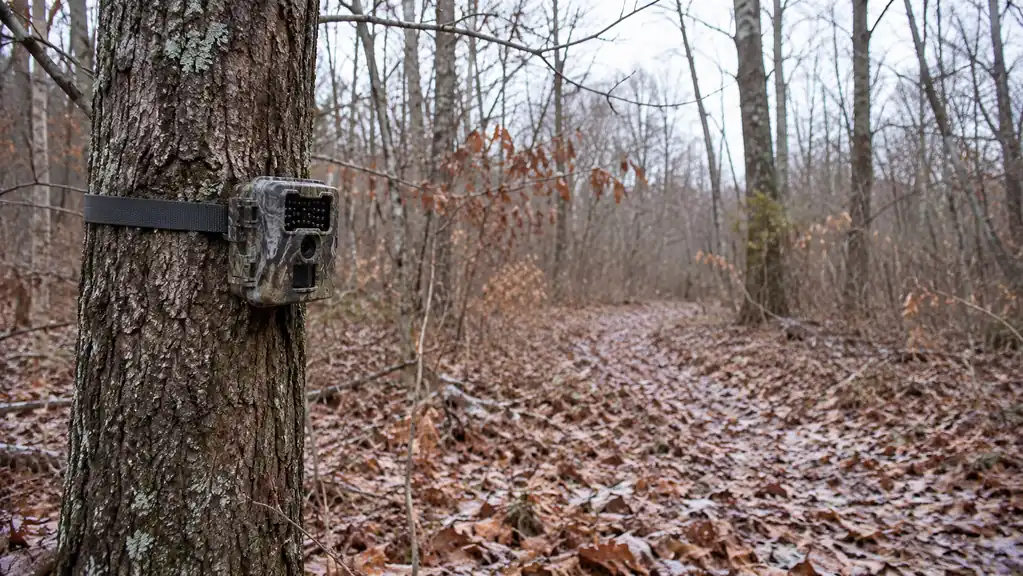
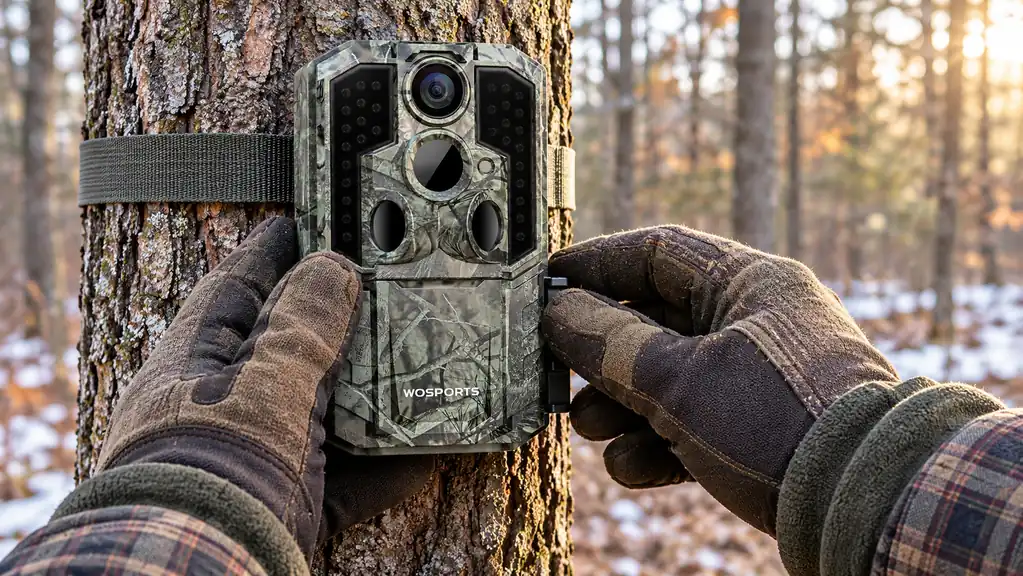
A trail camera feels like a luxury right up until the first morning it keeps you out of the wrong stand. I hunt a 60-acre wood lot outside Coudersport that my father left me, plus whatever state game land I can reach before first light, and I have run cheap cameras and good ones. The WOSPORTS Trail Camera is the one that has stayed on my trees. It is not fancy. It is non-cellular and non-WiFi, which means no data plan, no app, no monthly bill. It hangs there, takes the picture, keeps the record.
I am 58 and I have about 40 seasons behind me, and I still learn something every time I pull a card. My son-in-law Danny started hunting six years ago and asks me the same question every August: is a camera worth the money. My answer is always the same. It depends on whether you use what it tells you. Here are ten reasons this one earns its keep on my ground, written the way I would explain it to Danny at the tailgate.
The Camera That Earns Its Spot on the Tree
64MP stills, 0.2-second trigger, no-glow infrared, and no subscription to keep alive. This is the model I run on the wood lot.
Amazon Check Today's Price on Amazon →It Tells You Which Stand to Skip Before Daylight
I have a ladder stand on the south edge and a hang-on that looks down into a bowl of white oaks, and I have wasted mornings in the wrong one. A camera on each approach fixes that. The WOSPORTS stamps every picture with the time, so when I pull the card I can see which trail had deer moving at 6:40 in the morning and which one went cold three weeks ago. That is not scouting strategy. It is bookkeeping, and it keeps me from burning a Saturday on a stand the deer quit using.
One Deer You Never Saw Covers the Year
When people ask whether a camera pays for itself, they usually mean can it earn back what it cost. It does not have to be dramatic. If a camera shows you a buck working a saddle at last light in October, you hunt that saddle in November instead of guessing. One season of not sitting in the wrong place is worth more than the camera ever cost. I have killed deer on information a camera gave me. I have also just saved a lot of gas and a lot of cold mornings, which counts.
The 0.2-Second Trigger Catches Deer That Do Not Stop
Deer on a trail do not pose. They walk through. The WOSPORTS lists a 0.2-second trigger, and the practical version of that is a picture of a deer's shoulder instead of a picture of empty leaves where a deer used to be. I also set it to the 1 to 3 burst mode, so one walk-through gives me more than one frame. Half the value in a camera is knowing whether that buck was alone or trailing three does. A burst answers that question.
No Cell Plan Means No Bill in February
This camera is non-cellular and non-WiFi by design. Some hunters want pictures texted to their phone, and I understand the appeal. I also understand that a cellular camera wants a subscription every month whether the deer cooperate or not. Mine sits on a tree from August through January on batteries and a card. Nothing to renew, nothing to deactivate, nothing to argue with a provider about. If you run several cameras, that difference adds up faster than any single feature on this list.
64MP Photos Let You Judge a Rack Without a Second Trip
The camera shoots 64MP stills, and you can dial it down to 56, 48, 36, 16 or 5 megapixels if you want more frames per card. I leave it high. I want to know whether that wide eight point has a broken brow tine or whether he is a clean nine. At lower settings I have squinted at a picture and guessed. At 64MP I know, and knowing means I do not hike back in two days to look at him again.
No-Glow Night Vision Does Not Educate Your Deer
The infrared on this camera is no-glow, so the deer do not see a light pop on at the edge of a field. I have used cameras that glowed, and I have watched does stare straight into them from ten yards. Whether that educates a mature buck is an argument I will not win at the diner. I would still rather not flicker a light at a bedding area at 11 p.m. Night pictures come back clear enough to count points, and that is all I ask of them.
120 Degrees of Coverage Replaces Two Cheap Cameras
A 120-degree field of view is wide. Wide enough that on a scrape line I can hang one camera and get deer coming and going instead of covering a single direction. I used to strap two cheap cameras to the same crossing to see both approaches. Now one does the job. Fewer cameras on the property means fewer batteries to change and fewer cards to pull in the dark, and to me that is the savings that actually shows up.
The Two-Inch Screen Saves a Walk Back to the Truck
There is a 2-inch color LCD on the camera itself, and you can preview photos and video right there without pulling the card and carrying it out. In January that matters. Pull a card, walk out, drive home, find out the camera was pointed at a branch, drive back. That is an afternoon gone. I check the first few frames at the tree, adjust the aim, and leave. Small feature, and it has saved me more trips than anything else on this list.
Battery Power Runs Where There Is No Outlet
The nearest power to my wood lot is a mile and a half away at the house. This camera runs on batteries at 8 volts and is built to sit out there. I put fresh ones in before archery season and do not think about it again until the snow flies. The housing is waterproof, which in Potter County is not a marketing phrase. We get freezing rain in November that finds every seam on everything. Mine has come through two winters with frost on it and still taken pictures.
It Still Works After the Season Ends
Mounting is a strap on a tree, and the housing also takes a wall mount, so after deer season mine moves to the garage apron and then to the barn door. Motion sensor, infrared, waterproof, battery power. It watches a driveway the same way it watches a scrape. That second job is the part people forget when they decide whether a camera was worth owning. It does not go in a drawer in February. It goes to work on the next thing that needs watching.
What I'd Skip
Two things I would not buy this camera expecting. First, it will not text you. If you want pictures on your phone while you are at work, this is not that camera, and no amount of wishing changes it. Second, no camera is immune to a branch moving in the wind. I have come back to 400 frames of a sapling and nothing else. Clear the brush in front of the lens when you hang it, angle it slightly downhill on a trail, and most of that goes away.
I would also be honest about the resolution settings. Running 64MP fills a card faster than the lower settings. If you are leaving a camera out for a month, drop it to 16 or 36 megapixels and you will get more days out of one card. That is not a flaw. It is a setting, and the camera gives you six of them.
Pull a card, walk out, drive home, find out the camera was pointed at a branch, drive back. That is an afternoon gone.
Hang It Once and Let It Work All Season
Non-cellular, no subscription, no app to fight with. 64MP stills, 4K video, 0.2-second trigger, and a 2-inch screen so you can check the aim before you walk out.
Amazon Check Today's Price on Amazon →