
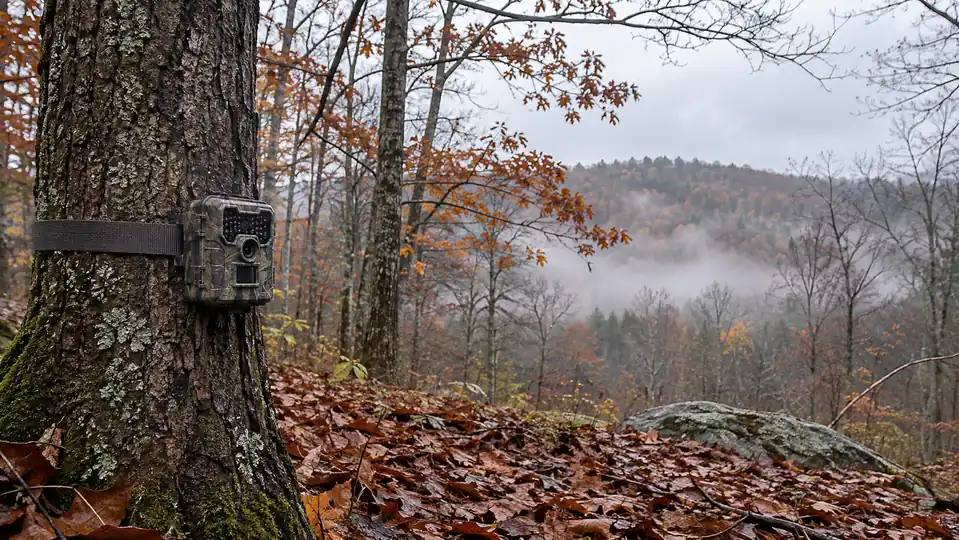
A trail camera is the best scouting help you can put in the woods and the quickest way to waste a season. I have run cameras on my late father's sixty acres outside Coudersport for close to twenty years, and I have lost more pictures to dead batteries, fogged lenses, and cards that filled in three days than I want to add up. So when I strapped a WOSPORTS trail camera to a maple above the scrape line on the north ridge last September, I figured I would be pulling it down in disgust by the rut.
I did not. That is worth saying plainly, because I am hard on gear and I say so when a thing fails. This one did not fail. The model I ran is the plain one, the non-cellular and non-WiFi version. It takes pictures, stores them on a card, and does nothing else. No app, no monthly bill, no pictures on my phone while I sit at the kitchen table. For most of the hunting I do, that is a feature rather than a shortcoming. What follows is what a season taught me.
The Quick Verdict
It held up through a Potter County fall and the cold that came after it. Sharp daytime photos, usable night shots, and no bill at the end of the month. The trigger is fast enough for walking deer, and the screen on the back means you can check it at the tree instead of dragging a laptop out to the truck.
Amazon Check Today's Price →Pictures on a card, no bill at the end of the month
The WOSPORTS 64MP runs on batteries, writes to a card, and previews on its own 2 inch screen. Nothing to pair, nothing to subscribe to, nothing to charge. That is the whole offer.
Amazon Check Today's Price on Amazon →How I've Used It
The camera went out on September 14 and stayed out until the middle of January. It hung about chest high on a maple that leans over a scrape line, maybe fifteen yards off a trail that runs from the north ridge down to a tag alder swamp. That trail is the one piece of ground on the lot where I can count on deer moving in daylight during the last week of October. I have a hang-on stand within bow range of that scrape, and the camera was there to tell me whether the sign I was reading was real or wishful.
I pulled cards roughly every ten days, which meant walking in mid morning after the thermals turned. My son-in-law Danny did two of the pulls when my back was giving me trouble in November. He is six years into this and still learning what a rub line means, so I told him to look at the time stamps and not just the big buck pictures. He came back with a card full of does and a lesson about patience.
The camera ran through two ice storms, a week where the overnight low sat below ten degrees, and one wet snow that turned to rain and then froze the whole thing into a shell. I chipped the ice off with a thumbnail, opened it up, and the card was dry. That is the review in one sentence. Everything after this is detail.
The 64MP Number, and Why I Still Shoot at 16
Ignore the big number for a minute. The camera can be set to 5, 16, 36, 48, 56, or 64 megapixels, and I tried most of them at one point or another. At 64 the files are big and hold more pixels than any scouting decision needs, and a 32 gigabyte card fills faster than you would like when the camera is sitting on a busy trail with a three shot burst going. I settled on 16 for everyday scouting and bumped it up when I wanted a clean look at a buck's rack.
Where the resolution earns its keep is the crop. I had a photo of a wide eight point working that scrape at 7:40 in the morning, and at 16 megapixels I could zoom in on his left side and count points without the picture falling apart into blocks. Two seasons back I was running an older camera that turned to mush at that range, and I let a buck walk because I could not tell whether he was legal for the county. Being able to look again, later, at something bigger than a smudge is the whole point of a camera.
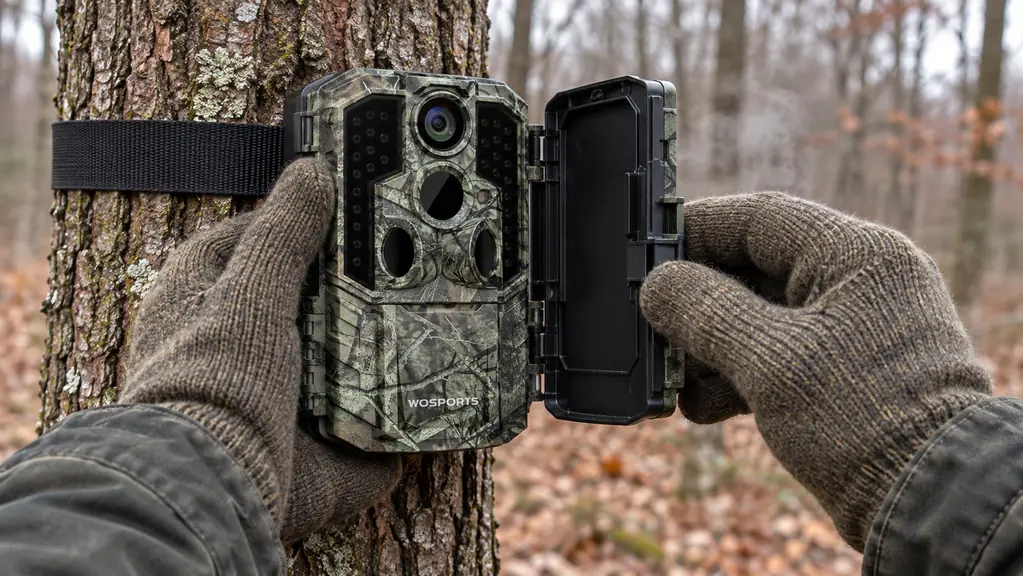
The 2 inch color LCD on the back matters more than I expected. You can preview photos and video right there on the unit without pulling the card and without carrying a laptop to the truck. I do my real sorting at the kitchen table with a card reader, same as always. But standing at the tree, thumbing through the last twenty shots, and deciding whether to move the set is worth a lot on a cold morning when you want to be back in the truck with the heater on.
A 0.2 Second Trigger on a Real Deer Trail
The spec sheet claims a 0.2 second trigger, and I have no way to time that with a stopwatch in the woods. What I can tell you is what showed up in the frames. On the morning of October 26 a doe came down the trail and I got her at the edge of the frame, then two more frames as she crossed, then a clean broadside. That is a deer walking, not a deer posing, and the camera caught the sequence.
The sensitivity is adjustable, and I turned it down one notch after the first card came back with a hundred pictures of poplar leaves moving in the wind. That is not a camera problem, that is me being lazy about setup. Once I set it for the spot instead of leaving it wide open, the empty frames dropped to almost nothing. Any camera will do that to you. This one gave me the room to fix it without reading a manual twice.
The 120 degree detection angle is wide enough that it sees the trail and the scrape both, which is why one unit covered that ridge. The burst can be set to one, two, or three shots. I run three on scrapes, because a buck often works the licking branch and then steps back, and the third frame is usually the one that shows his body. It also records 4K video, though I mostly leave it on photos and save the card space.
No-Glow Night Vision on the North Ridge
The night pictures come from infrared, and this one is no glow, meaning there is no light on the front to spook anything. I have run cameras that flashed and watched deer stare straight into the lens. This one did not get that reaction once in four months, and the does kept using the same trail after dark, which is the only test that matters.
The nighttime photos are black and white, which is what infrared gives you. They are good enough to identify a deer at twenty yards and make a call on a buck at fifteen. Past that the detail softens, and I would not expect to judge a body at forty yards in the dark. The daytime photos are the ones I make decisions on, and those are sharp enough to count on.
One thing I did learn: keep the lens clear. A spider built a web across the front in early October and I got three days of blurry nothing before I noticed. That is on me, not the camera, but it is the kind of thing that makes a man think gear failed when it did not. Now I wipe the front with my sleeve every pull, same as I check the strap.
Batteries, Weather, and the Two Inch Screen
It runs on batteries, and the spec sheet lists 8 volts and 6 watts. What mattered to me is that a set lasted from the middle of September into the second week of December with the camera firing every day. When I swapped them I put in fresh ones and the WOSPORTS ran the rest of the winter without a complaint. Cold is what kills cameras up here, not rain, and this one kept working through the worst of it.
It is waterproof, which I tested whether I meant to or not. The December ice storm buried it. The January wet snow froze it solid. I never got moisture inside the housing or fog on the lens once the temperature settled. The unit weighs a little over a pound, and mounting is a strap and a tree. It is set up for tree mount or wall mount, and the back has the usual strap slots, so it goes on a post at the barn just as easy as it goes on a maple.
The buttons are push buttons and the menus are simple enough that I set the whole thing up in the truck in about four minutes the first time, and I am not a patient man with menus. No pairing, no account, no firmware dance, no standing in the cold waiting for a signal. That is the trade you make with a camera that does not talk to your phone, and it is a trade I will take most days.
What It Doesn't Do
This is a non-cellular, non-WiFi camera. It does not send pictures anywhere. If a good buck walks past at two in the afternoon while you are at work, you will find out when you pull the card, and not a minute sooner. For the way I hunt, that is fine. I am on that lot most weeks and pulling a card on the way to the stand is part of the routine, same as checking the wind.
But if your ground is three hours away, or you are trying to watch a property you only visit twice a season, this is the wrong tool, and no amount of fiddling will make it the right one. That is not a knock, it is the plain fact of what a card-and-battery camera is. The comparison of cellular and non-cellular cameras covers that trade in more detail and is worth reading before you spend on either. If you are trying to justify a camera in the first place, the piece on how a trail camera pays for itself is the one I would hand to Danny.
What I Liked
- Sharp daytime photos, with the option to run 64 megapixels when you want a hard crop on a rack
- 0.2 second trigger caught walking deer, not just deer standing still
- No-glow infrared did not spook the does using the trail after dark
- Waterproof housing shrugged off two ice storms and a lid frozen shut
- 2 inch screen means you can check photos at the tree without a laptop
- No app, no account, no monthly bill attached to it
- One set of batteries lasted from September into December
Where It Falls Short
- Non-cellular, so you get nothing until you physically pull the card
- Night photos soften past about twenty yards
- Factory sensitivity gave me a hundred frames of moving leaves before I dialed it in
- No companion app to sort or catalog anything, it is all by hand
- The 64 megapixel setting eats card space fast when the burst is set to three
It sat through two ice storms and a week below ten degrees, and the morning I pulled it in January it had just fired on a doe and two fawns.
Who This Is For
If you hunt ground you can walk to in an afternoon and you want to know what is using it, this is the camera. It suits a wood lot, a farm edge, a ridge trail, the kind of place where pulling a card costs you a detour and nothing else. It suits a man who does not want another monthly charge on the statement, and it suits a first camera for somebody like Danny, who is learning to read sign and needs a record of what actually moved and when it moved. Set it on a scrape in September, leave it alone, and it will tell you the truth.
Who Should Skip It
Skip it if your hunting ground is a long drive and you cannot get to it often, because a card camera you visit twice a season is a card camera that tells you old news. Skip it if you want pictures on your phone in real time, since this one will not do that and no setting change will fix it. Skip it if you want an app that sorts and scores photos for you, because every bit of that work here is done by hand. And leave the 64 megapixel setting alone on a busy trail with a three shot burst unless you are carrying a bigger card than I do.
The one that was still working in January
Batteries, a card, a strap, and a two inch screen. The WOSPORTS 64MP did the plain job all season with no subscription hanging off it, and it was still firing when I finally pulled it off the ridge.
Amazon Check Today's Price on Amazon →