
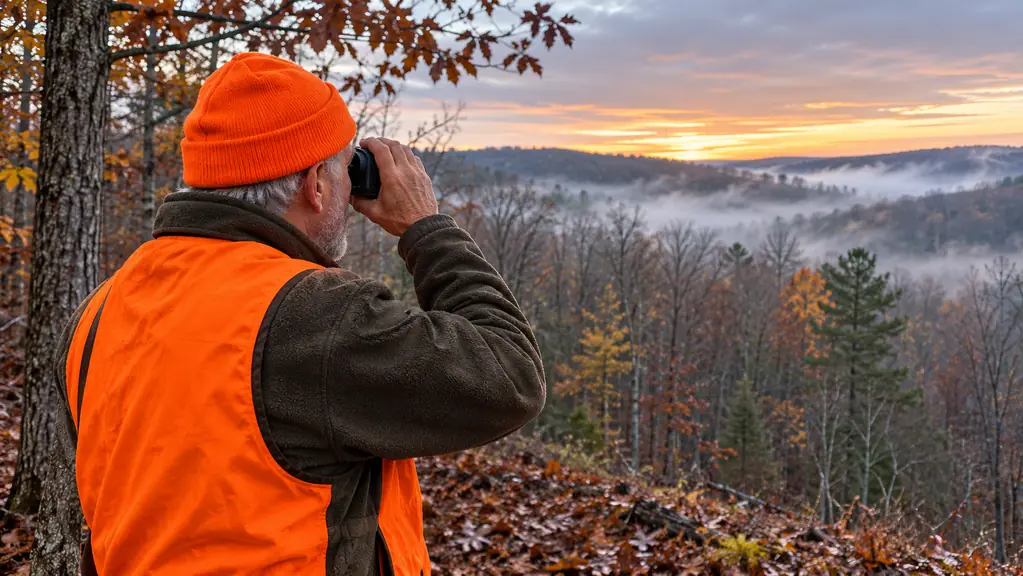
I bought the AOFAR HX-700N in July of 2023 because I was tired of guessing, and guessing is how a bowhunter wounds a deer. I have hunted the same sixty acres outside Coudersport for most of forty seasons. I know that ground the way a man knows his own driveway, every stump and every worn path through the multiflora rose. And I could still stand at the base of a white oak, look at a buck slipping through the hemlocks, and be off by thirty yards. Thirty yards is the difference between a clean hit and a long night with a flashlight and a bad feeling in your chest.
So I bought a rangefinder. I bought this one because it was inexpensive and small, and because I did not want to hang four hundred dollars of electronics off my pack and then worry about it. What follows is not a spec sheet read out loud. It is two seasons of use, one deer, a couple of opportunities I fumbled, and the handful of things I wish somebody had told me at the tailgate before I spent the money.
The Quick Verdict
Small, light, and repeatable at the distances that actually matter. The 700 yard figure on the box is a catalog number, not a hunting number, and the body is plastic. It is still the first thing I reach for when I get to the stand.
Amazon Check Today's Price →The 27 yard shot is the one that counts. See today's price on the AOFAR HX-700N.
Two modes, 6 power magnification, 5 to 700 yards, and a carrying case and battery in the box. If your shots run inside 100 yards, this covers them, and it weighs 180 grams doing it.
Amazon Check Today's Price on Amazon →How I Ended Up Carrying One
It started with a doe at what I swore was forty-five yards. I held high, she ducked the arrow, and when I stepped it off afterward it was twenty-nine. That is an embarrassing thing to admit at fifty-eight years old with four decades in the woods, but it is the truth, and it is the reason the rangefinder lives in the top pocket of my pack now instead of rattling around in the console of the truck.
Danny, my son-in-law, had been after me for two seasons to just get one. He started hunting about six years ago and he came into it with a completely different set of habits than mine. He ranges everything. A stump. A fence post. A particular hemlock branch he has already decided is his limit. He does it in July, when there is nothing to shoot at, so that in October he is not doing arithmetic while a deer is walking through his shooting lane.
August of that first year I walked the wood lot with a notebook and a cheap pen and ranged every fixed object on the property that a deer might walk past. The white oak at the corner of the food plot. The fence post at the top of the lane. The big hemlock where the ground falls away toward the creek bottom. I wrote forty-one, sixty-three, twenty-seven, and I taped the paper inside the stand. Six weeks later I killed my first deer off that stand in four years, at a distance I already knew before I picked up the bow. Nothing about my shooting changed that season. The difference was that I had stopped guessing.
That is the real value of this thing, and it has nothing to do with 700 yards. You range landmarks in the off season. You write the numbers on a piece of paper and you tape it inside your stand. Then on the day, you already know before you ever raise the bow.
What the AOFAR HX-700N Actually Does
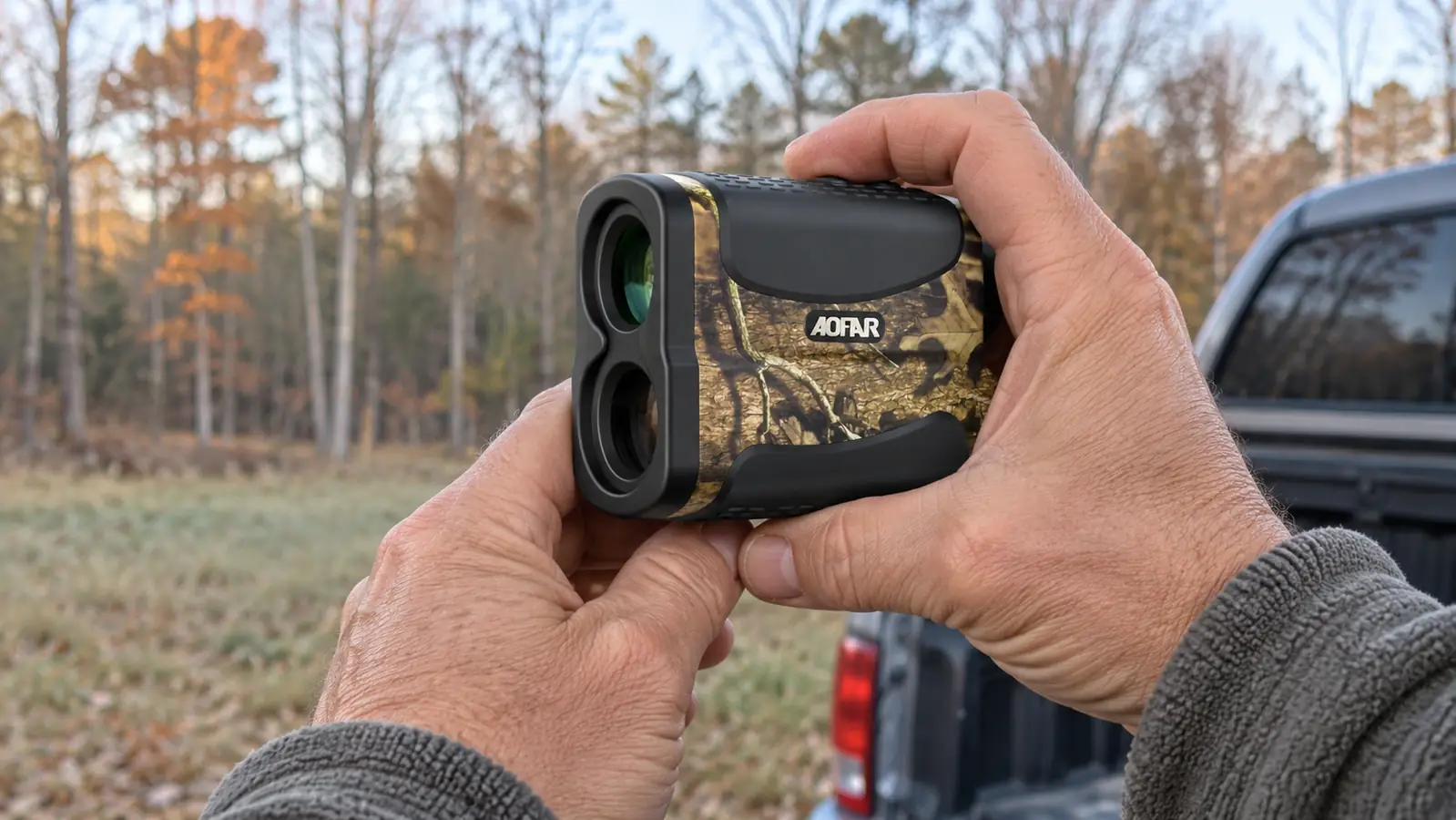
AOFAR rates this unit at 5 to 700 yards with 6 power magnification. There are two modes on it, Range and Speed, and that is the entire menu. You put the small circle in the center of the view on the object you want, you press the button, and you get a distance in the display. That is the whole interaction, and I mean that as praise.
The listing puts it at 110 by 75 by 45 millimeters and 180 grams, which in my hand means it disappears into a jacket pocket and I forget it is there until I need it. It ships with a carrying case and a lithium battery. That sounds like small talk until you open a box in the truck at five in the morning and find out you are missing the one size of battery nobody in Potter County stocks before daylight.
The body is plastic with rubber at the grip areas, per AOFAR's own listing, and the water resistance level is waterproof with an IP54 rating. I will translate that, because IP54 does not mean what most people hear when they see the word waterproof printed on a box. It means dust intrusion is limited and rain falling on it, or spray coming off a wet branch, is not going to kill it. It does not mean you can drop it in the creek and fish it out. Mine has been out in steady rain twice and wet snow once and it kept reading. I have not tested it any harder than that and I do not intend to.
I ranged the same oak at the edge of the food plot four times in one sit and got 41, 41, 42, 41. That kind of repeatability is the entire job. Everything else on the box is marketing.
What Nobody Tells You About a 700 Yard Rating
The number on the box is 700 yards, and technically it will give you a reading out there. What the box does not say is what it is reading. At long distance the beam has spread wide enough that you may be picking up the side of a hill, a maple trunk, or a patch of sun on a rock instead of the animal you thought you were on. The further out you go, the less that number means, and the more confident the display looks while being wrong.
I found this out on a power line cut over on the game lands. I was ranging a deer standing at the far edge, and the unit kept telling me 190, then 191, then 188, while I was looking at something I would have sworn was further. The beam was catching the brush in front of the deer. That is not a defect in the AOFAR. That is how a laser works, and any rangefinder in this class will do the same thing to you.
Later that same morning I tested it on purpose. I stood on the gas line and ranged a bare hillside with nothing between me and it, and got steady readings well past four hundred. Then I stepped ten feet to my left so a tangle of scrub apple sat between me and that same hill, and the numbers fell apart. Same hill, same light, same hand on the same button. The only thing that changed was what the laser had to get through. That is the honest way to think about the 700 yard claim: it is a clean line number, and hunting is rarely a clean line.
Inside a hundred yards, which is where I actually shoot, the thing is boring and reliable. That is the highest compliment I can pay a piece of hunting gear. Boring means it does not cost you a chance.
The second thing nobody tells you is that this unit does not compensate for angle. If I am twenty feet up a ladder stand and the deer is downhill from me, the distance along my line of sight and the true horizontal distance are not the same number, and I have to do that correction in my own head. Plenty of rangefinders do it for you. This one does not, and AOFAR does not claim it does. Know that going in rather than finding out on a steep piece of ground.
Two Modes, and One of Them Sits Unused
Range mode is what I use. You put the circle on the object, press the button, and read the number. That is the whole interaction, and after two seasons my thumb knows where to go without me thinking about it.
Speed mode measures how fast something is moving, and it exists for a reason I have never needed. I am not ranging a moving vehicle. I am ranging a stump and then sitting still for four hours in the cold. If you varmint hunt, or you shoot at distance at running targets, maybe it earns its place on the menu. For whitetail from a stand it is a setting I scrolled past once in the summer of 2023 and have not touched since.
I will say this for the controls, though. With a glove on, in the dark, I can find the button and get a reading without looking down at my hands. That matters more than any number on a spec page, because the moment you need it is never a moment you can spare for looking at your own fingers.
What I Liked
- Repeatable readings inside 100 yards, which is where bowhunting actually happens
- 180 grams and small enough to live in a jacket pocket all day
- 6 power magnification is enough to pick a single opening out of a tangle
- Carrying case and a lithium battery both come in the box
- IP54 handles rain, wet snow, and spray off branches
- Two year VIP support listed by AOFAR
Where It Falls Short
- No angle compensation, so uphill and downhill shots need your own math
- The 700 yard figure is optimistic once there is cover in the way
- Plastic body with rubber only at the grip areas will not shrug off every drop
- Speed mode is dead weight for a whitetail hunter
- It will read the brush in front of a deer without warning you that it did
What Held Up Over Two Seasons
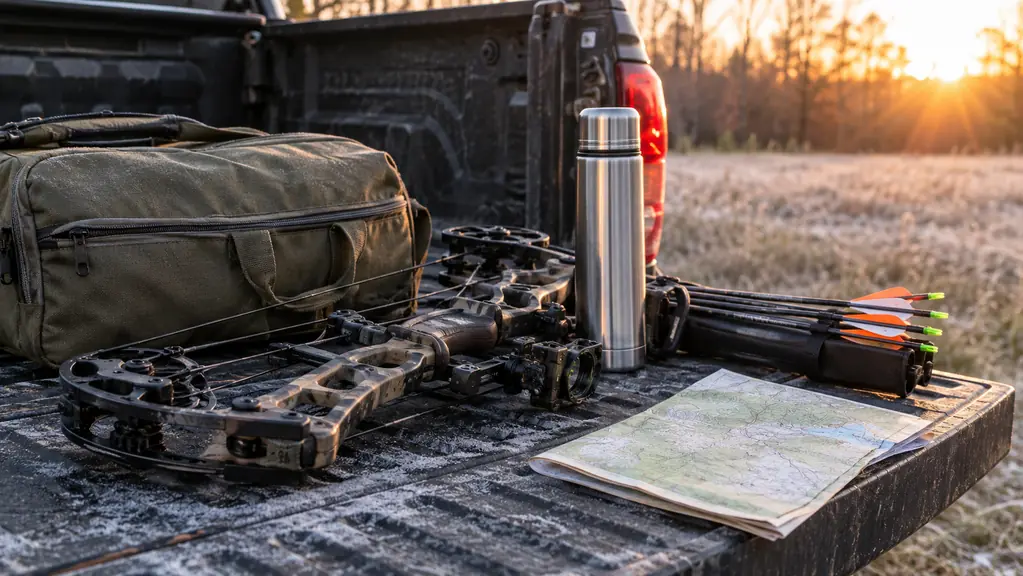
It has ridden in the top pocket of my pack through two Pennsylvania winters and one very wet October. It got knocked off the platform of the hang-on stand onto a rock ledge, which is the only drop that ever worried me, and it still reads true. There is a scuff on one corner and that is the extent of the damage.
That drop came in November of the second season, on a morning when the platform was slick and I was in a hurry because I had gotten a late start. It hit the ledge, bounced once, and slid off into the leaves. I climbed down, picked it up, wiped the lens on my shirt tail, and ranged the same stump I range every morning from that stand. Forty-four. Same as always. I have thought about that morning more than once since, mostly as a reminder to slow down on a wet ladder, but also as the reason I trust this unit more now than I did before it fell.
The battery it shipped with lasted me into the second season. I keep a spare in the case now, not because it died at an inconvenient moment, but because I decided I did not want to find out the hard way what that moment feels like.
I have not needed the two year support, so I cannot tell you how that phone call goes. AOFAR lists it on the box. That is the whole of what I know about it, and I would rather say that than pretend otherwise.
Where It Falls Short
The plastic body is the first thing. It is light because it is plastic and rubber, and light is exactly why I carry it, so I am not going to complain too hard about the trade. But this is not a piece of gear you hand to the buddy who drops things. There is rubber at the grip areas and nowhere else, and a rangefinder that lives loose in a truck console all season will eventually make you pay for it.
The second is the display in low light. Late in the evening, when the woods go flat gray and the deer are just starting to move, the readout takes my eyes a second longer to find than I would like. My eyes are fifty-eight years old and they have done a lot of squinting. Your experience will probably be better than mine, but it is worth knowing before you buy.
The evening I noticed it worst was the last week of the early archery season, with maybe fifteen minutes of legal light left and a doe and two fawns working the edge of the turnips. I already had the range, twenty-nine yards, I did not need the number. I raised the unit anyway out of habit, and the readout was there but faint, and I spent a beat too long hunting for it. Nothing went wrong that night. I did not shoot. But I remember thinking that if I had truly needed that number in that moment, I would have wanted it brighter than it was.
Third, and this is the one that matters: the unit does not tell you when it is lying. If the beam catches a branch instead of the deer, you get a confident number that is wrong, and nothing on the display warns you. That is not an AOFAR flaw, it is a laser flaw. But an honest review has to say it out loud, because a rangefinder that reads 190 when the deer is at 260 will cost you a deer just as surely as no rangefinder at all. Range the tree beside the deer, not the deer. Range it twice.
Who This Is For
This is for the hunter who takes shots inside a hundred yards and wants a number instead of an estimate. Bowhunters, mostly. Muzzleloader and shotgun hunters in states that keep them close. Anyone who has ever stepped off a shot afterward and been surprised by the answer, which is most of us at one time or another. If you want a small, light, repeatable unit that you will not baby and will not cry over, the AOFAR HX-700N does that job for a very small share of what the premium optics cost.
It is also a sensible first rangefinder for somebody like my son-in-law was six years ago, learning the woods from scratch and building good habits before bad ones set in. Learn to range landmarks in the summer and you will never do arithmetic with a deer in front of you again.
Who Should Skip It
If you shoot at distance, particularly from elevation, and you want the unit to figure the angle for you, this is not that unit. Pay for the feature. Same if you hunt wide open country where a genuine 400 yard read matters, or if you are rough on gear and want something that survives being thrown in the bed of a truck. And if you already own a rangefinder that reads true inside a hundred yards, there is no reason to replace it with this one. Nothing here will change your season.
What I would tell you at the tailgate is this. The AOFAR HX-700N solved the problem I actually had, which was not knowing the distance to a deer at thirty yards. Everything past a hundred yards on that box is a conversation for a different hunter with a different rifle and a different piece of ground. Buy it for the shot you take, not the number printed on the packaging.
Two seasons in the rain and it still reads true. Check today's price before the season opens.
6 power magnification, 5 to 700 yards, two modes, 180 grams, and a case and battery included. The distance that decides your season is almost always under 60 yards, and this one handles it without drama.
Amazon See Today's Price on Amazon →