
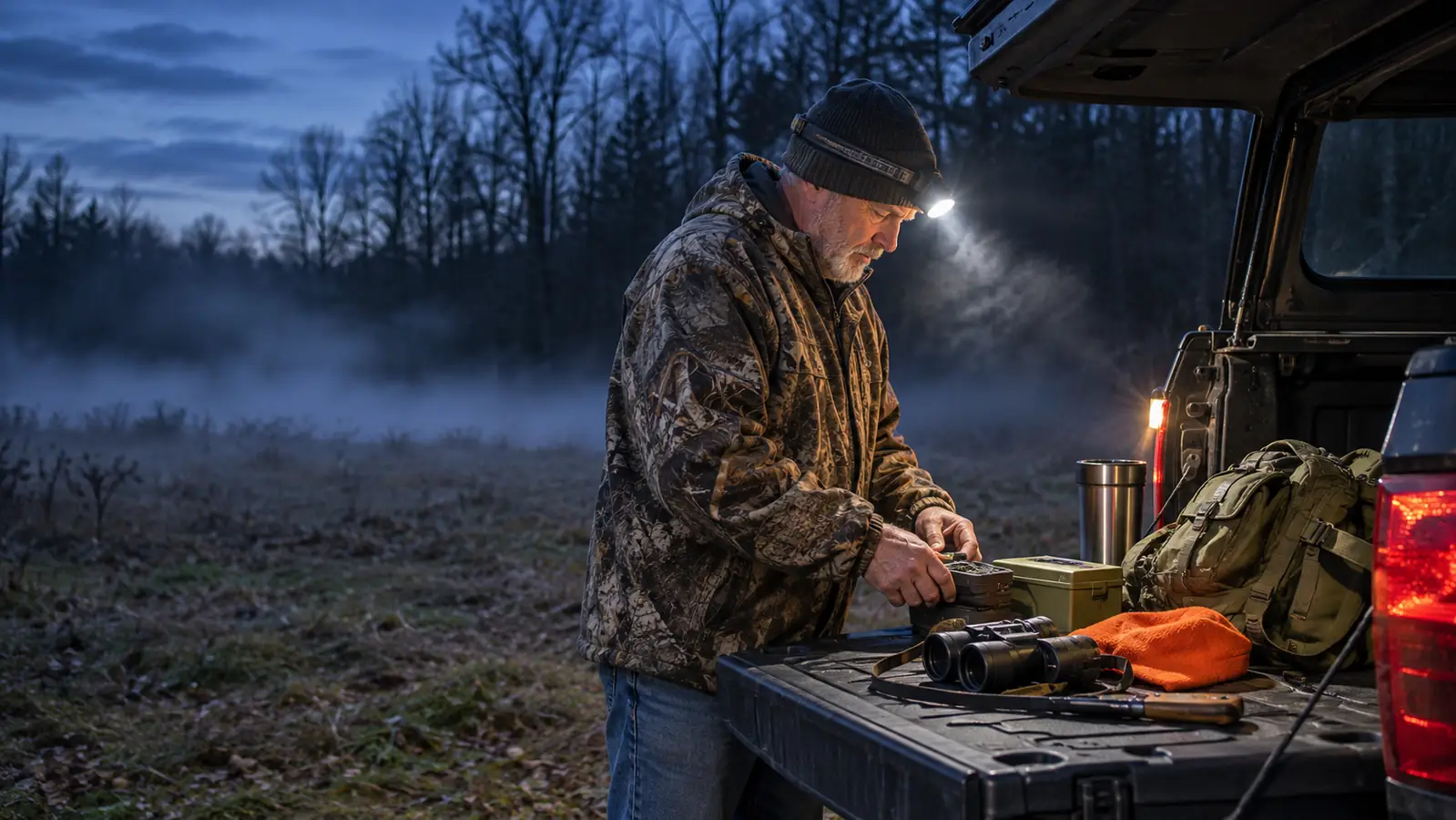
The wind was wrong and I knew it about ten minutes before she did. A doe came in behind my ladder stand on the wood lot, crossed my entry trail, and stopped with her nose up. She never looked at me. She did not have to. She blew once and took the rest of the morning with her. I was maybe twelve seasons in at that point, and it was the first time I understood that I had not been seen. I had been smelled.
I have spent a lot of Octobers since then working out what actually matters. Not what sounds good on the label, not what the fellow at the counter swears by, but the things that change the outcome. These days the last step in my routine is Wildlife Research Center Super Charged Scent Killer Spray, the 48 ounce combo with the field bottle and the refill. The spray is not the routine. It is the final coat on a job that starts a week earlier. Here is the order I do it in, and the reason behind each step.
The Last Step, Not the Only One
The 48 ounce combo gives you a 24 ounce field bottle and a 24 ounce refill, so the bottle in the truck never runs dry on a Sunday morning.
Amazon Check Today's Price on Amazon →Step 1: Get the Storage Right, a Week Out
Most scent problems start in the closet, not on the ridge. If your hunting clothes hang next to your work boots and a gas can, they have been picking up odor since August. I keep a plastic tote with a lid for base layers, mid layers and the outer jacket. Nothing else goes in it. Not the gloves that rode around in the truck all week, not the hat that sat on the dashboard.
The tote gets a scent-free dryer sheet or a couple of cedar branches. That is it. Some hunters use activated carbon liners and they work, but the tote and a good lid do most of the job with less fuss. What matters is that clean clothes go in and clean clothes come out, and that nothing scented gets in between.
I set this up a week before the season, not the night before. It takes ten minutes, and it means that on opening morning I am not tearing the closet apart looking for a jacket that has not been worn to the hardware store. Danny, my son-in-law, learned that one in his second season. He washed everything, then hauled it out to the truck in the same duffel bag he takes to the gym.
One more thing about the tote itself. It rides in the cab or under the cap, not in the open bed next to a chain saw and a fuel can. I have a cap on my F-150 and the tote sits right behind the cab. It sounds fussy. It is ten seconds of effort and it protects every bit of work you did that week.
Step 2: Wash Unscented and Dry It Outside
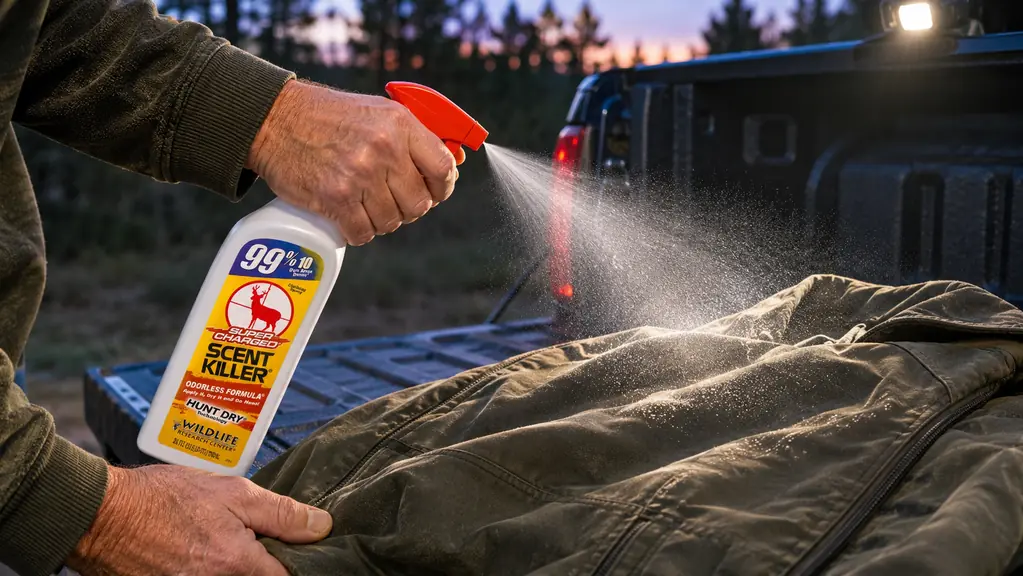
Wash everything in a scent-free detergent with no dye and no perfume. Run the load twice if regular laundry has been through that machine recently. Dry it on the line outside or on a rack on the porch. Not in the dryer, unless the dryer has been cleaned out and nothing else is going in it.
Here is the part a lot of hunters skip. They get the clothes clean and then put them on in a bathroom that smells like shampoo, deodorant and hairspray, and then they wonder why a doe blows at forty yards. Clean cloth is step two of six. It is necessary. It is nowhere near sufficient.
Base layers get their own attention. Cotton undershirts are the worst offenders because they hold moisture and odor both. A merino or synthetic base layer, washed the same way as everything else, does better all day. If you hunt multiple days in a row, you need two sets. One on your back, one in the tote. Rotating beats re-wearing, and re-wearing is how a three day hunt turns into a one day hunt.
Boots get their own treatment. I do not wash leather. I wipe the outside down with a damp rag, let them dry, and then treat them the same way I treat the rest of the gear, which is the next step.
Step 3: Treat the Gear You Forget About
Everybody remembers the jacket. Nobody remembers the pack straps. That nylon webbing sits against your shirt all morning, and it has been in the truck bed, on a tailgate, and on a bench seat at a diner. Spray it. Same for the release aid, the rangefinder body, the binocular housing, the seat pad on the stand, and the inside band of your hat.
I do this pass the night before and let everything hang in the garage to dry. The Wildlife formula is built to keep working after it dries, and that is the reason I can treat gear on Friday evening instead of standing in the dark at four thirty in the morning trying to spray a backpack. The label claim is 99 percent effective at stopping replicated human odor ten days after drying, in testing at Rutgers. I cannot verify the lab work. I can tell you that a jacket treated on a Friday still did its job the following weekend, which is more than I could say for the homemade mix I used for years.
Do not forget the stand itself. You will put a bare hand on that ladder rail, and bare hands are the whole problem. Either give the rails a pass or keep your gloves in the tote and put them on before you touch anything.
The bow or rifle deserves a mention too. I do not spray the bow and I do not spray a scope. I wipe them down with a scent-free cloth and then keep my hands off my face. Metal and glass do not hold odor the way fabric does, but your hands transfer it to everything you touch after that.
Step 4: Spray Down at the Truck Before You Walk In
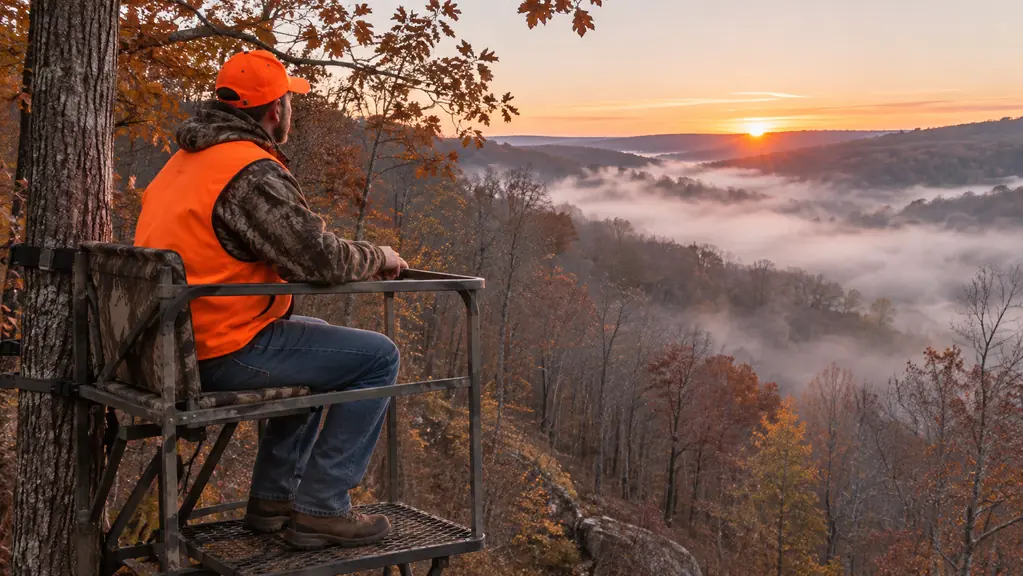
This is where the Wildlife spray earns its place. I strip to base layers at the tailgate, spray everything I am going to wear, give it a minute, and then dress. Boots first, especially the soles and the laces. Then the pack, the hat and the gloves. Let the gloves dry before you put them on, because wet gloves in November are their own kind of misery.
The 48 ounce combo is a 24 ounce field bottle and a 24 ounce refill. The field bottle lives in the truck. The refill lives in the tote. That split is the part I would pay for by itself, because it means I am never carrying a full bottle up a ridge and I am never out of spray on a Sunday with the nearest store forty minutes away.
Spray until the fabric is damp, not soaked. A light, even pass over the whole garment does more than a heavy dose on one shoulder. Then let it dry before you layer up. The whole thing takes about four minutes at the tailgate, and I would rather lose those four minutes in the dark than lose the morning at first light.
One caution. Do not spray the inside of the truck, the seat, or the floor mats. I have heard of all three. Spray the gear, outside, with the wind at your back, and let it dry before it goes back in the cab.
Step 5: Hunt the Wind and Guard Your Entry
Everything above buys margin. It does not buy an exemption from the wind. A deer's nose is still the best detector in the woods and a treated jacket does not let you walk in with a tailwind. I check the wind at the truck and again at the base of the stand. If it is wrong for that stand, I hunt the other one or I go home. That sounds like an easy thing to write and a hard thing to do at five in the morning.
The entry counts as much as the walk in. I do not push through saplings when I can step around them. I do not grab brush to steady myself. I stop short of the stand and let the woods settle for a few minutes before I climb.
Sweat is the part nobody talks about enough. You can treat a jacket perfectly and then fog it up climbing a ladder in forty degree weather. I dress lighter than I think I need, carry the insulation in the pack, and put it on once I am seated and cooled down.
On the wood lot I keep a ladder stand and a hang-on. The ladder stand is my northwest wind stand. The hang-on is for anything with an east in it. Two options is a scent decision as much as a comfort one, because the alternative to a bad wind is usually a bad decision.
Danny asks me every year whether all of this is worth the trouble. My answer is that the routine costs maybe twenty minutes across the whole week, and it has changed how close the deer get before something goes wrong. That is the entire return on it. You are not going to beat a nose. You are going to give it less to work with.
What Else Helps
Rubber boots help, not because they are magic but because they do not pick up ground scent and hold it the way leather does. I wear one uninsulated pair and add wool socks as the season goes.
Food, fuel and smoke. Eat before you dress, not in the stand. Do not top off the truck in your hunting clothes, which is the most common mistake I see at the gas station on opening morning. Do not stand next to a fire in your jacket, and do not smoke in it.
A wind checker is worth more than any spray on the market. A cheap powder puff tells you what the air is actually doing at your stand instead of what the forecast promised.
I do not use cover scents anymore. A strong cover scent is still a foreign odor, and a doe that has smelled a hundred bottles of pine is not fooled by the hundred and first. Clean and neutral has worked better for me than disguised.
A note on the ground blind for turkey season. I treat the interior fabric once, before the season, and let it air out completely. A blind holds odor like a closet and it sits in the sun all day. Spray it, dry it, and then leave it alone.
Storage after the hunt matters as much as anything here. The jacket goes back in the tote, not into the truck bed. A treated jacket that spent the week in a cab with a fuel can has given back everything it gained.
And the last thing I would add is a check on your own habits. Most of the scent failures I have had were not the fault of a product. They were the fault of a jacket that sat in the truck, a hat that went into the house, or a pair of gloves I put on after pumping gas. The Wildlife spray does its job if you let it.
The label claims 99 percent effectiveness at stopping replicated human odor ten days after drying. Ten days of persistence is the number that matches what I have seen in the field.
Four Minutes at the Tailgate, Then Hunt the Wind
A 24 ounce field bottle for the truck and a 24 ounce refill for the tote. That is a full season of pre-hunt passes for one hunter.
Amazon Check Today's Price on Amazon →