
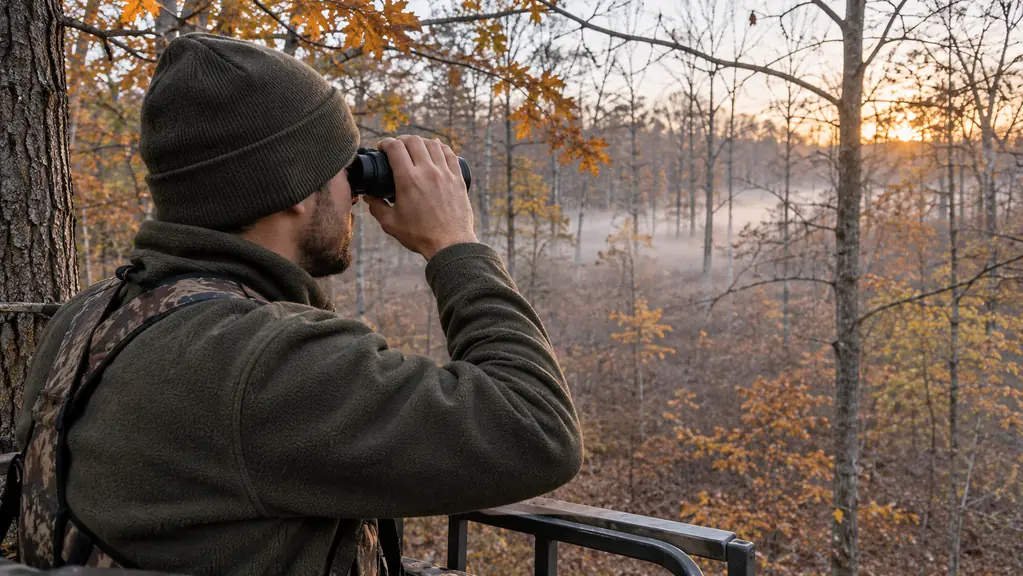
For about twenty of my forty seasons I guessed at yardage in the deer woods. I killed deer doing it. I also missed deer doing it, and the misses are the ones that stay with you. A buck I swore was thirty-five yards, arrow under his chest by the width of my hand, and me replaying that shot in my head for the rest of the week. He was closer to forty-five. Nothing about that morning was strange. Sit still in the woods long enough and your eye starts lying to you, and it lies worst across an open right-of-way where there is nothing to compare against and the ground falls away from you.
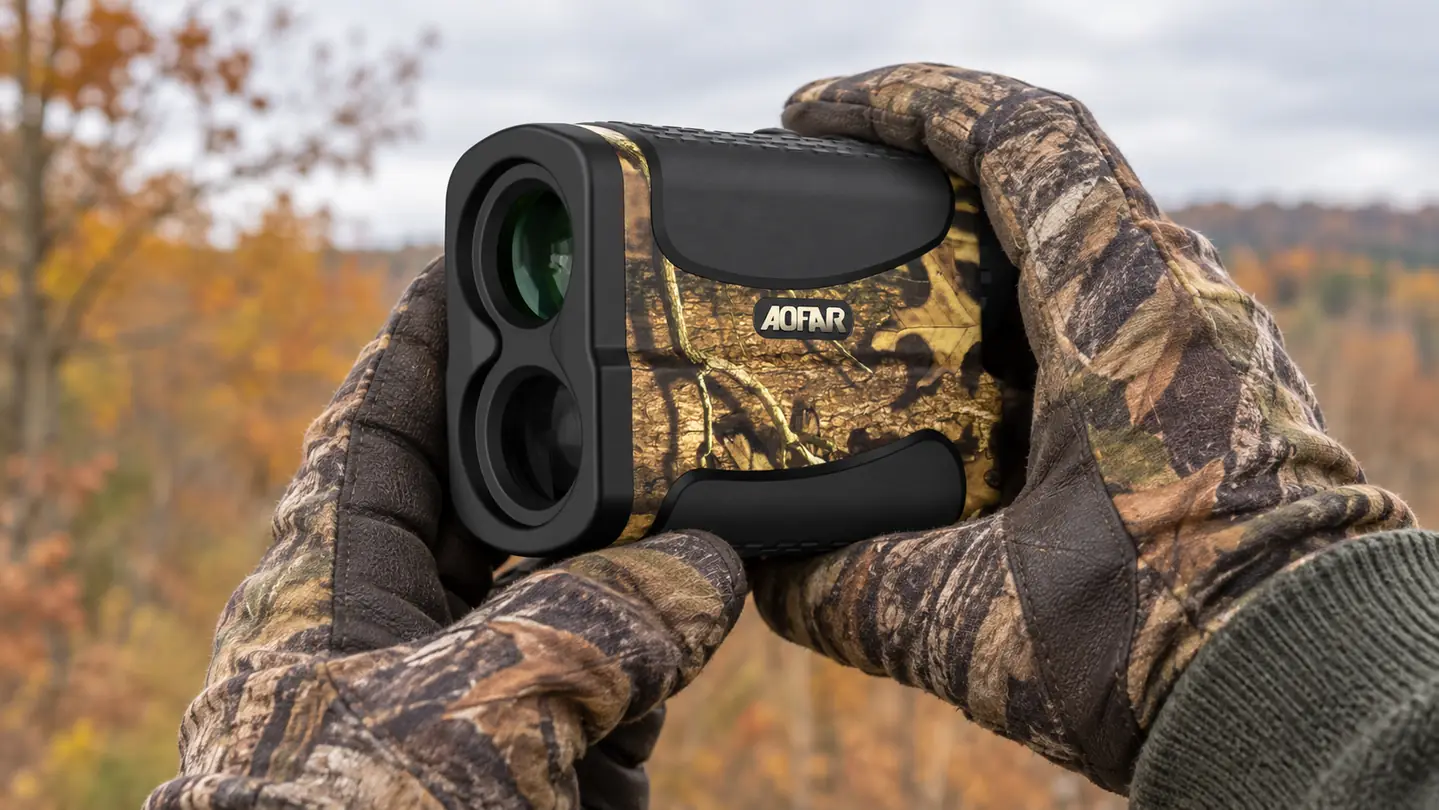
A rangefinder fixed that for me. The one that has lived in my jacket the longest is the AOFAR HX-700N. It measures from 5 to 700 yards, magnifies 6 times, and runs two modes, Range and Speed, which is one more mode than I will ever need on a whitetail. It weighs 180 grams and measures a hair over four inches long, so it disappears in a shirt pocket until I want it. That is the whole machine. The rest of this is about how I use it on a live deer, because a rangefinder left in the pack is a paperweight, and a rangefinder fumbled at the wrong moment is worse than nothing at all.
Know the distance before the deer steps into the lane
The AOFAR HX-700N reads 5 to 700 yards at 6x magnification, weighs 180 grams, and carries Range and Speed modes in a body that fits a chest pocket. Carrying case and battery come in the box.
Amazon See the AOFAR HX-700N on Amazon →Step 1: Range the deer, not the brush behind him
A rangefinder measures the first thing the beam finds, not the thing you meant. That sounds obvious until a deer is standing in a cut bean field with saplings between the two of you, and you get 212 yards when he is at 140. The beam caught a branch. You look at the number, you believe the number, and now you are holding high at a deer you could have shot flat. It happened to me two seasons ago on the gas line that crosses the back of my father's sixty acres. A doe stepped out of the edge and I got 212 on a deer standing inside 80. The beam went over her back and found the far treeline, and nothing on that display told me it had done anything wrong.
So I aim at the biggest flat piece of the animal I can find, which is the chest behind the shoulder, and I hold it there until the read settles. If he is quartering, I range the body and then think about the arrow path afterward. A deer at 40 yards quartering away is not a 40 yard shot to the vitals, it is less than that. The rangefinder tells you where the animal is. It does not tell you where to put the pin.
When the cover is thick I range the ground at his feet instead. Dirt does not move, and it does not have hair that scatters a beam. If the read on the ground and the read on his chest agree within a couple of yards, I trust the number. If they disagree by twenty, I know something got in the way and I range him again.
Step 2: Brace the unit and hold it still
Six power sounds like nothing until you try to hold it on a deer's shoulder from a ladder stand in October. At that magnification every shake in your hands is magnified right along with the deer, and a cold morning makes it worse. That first fall I could not get a clean read to save my life. I would put the reticle on a doe's shoulder and get 44, then 61, then something I did not trust at all, all inside ten seconds, and by the time I settled down she was in the brush and gone.
What works is bracing. I tuck my left elbow against the tree trunk or rest it on the stand rail, settle the unit against my brow, breathe out halfway, and press the button at the bottom of the breath. Then I range him a second and third time. Two matching numbers means I have him. Three different numbers means I am moving or the beam is bouncing off cover, and either way I do not shoot on a guess.
The other habit worth building is slowing down enough to range at all. A deer that walks into a lane at 80 yards gives you maybe six or eight seconds before he is behind a blowdown. Ranging during that window and then settling the pin is a two-step job, and it only goes smoothly if you have done it a few hundred times on stumps and fence posts first.
A deer at 40 yards quartering away is not a 40 yard shot to the vitals, it is less than that. The rangefinder tells you where the animal is. It does not tell you where to put the pin.
Step 3: Do the figuring before the deer moves
The number on the screen is a distance. What you do with your sight is on you, and that figuring belongs in July, standing in your yard with a target, not in October with an animal standing in front of you. I shoot at known distances until I know what my pins do at 20, 30, 35 and 40. Then the rangefinder hands me a number I already have an answer for. Last July I shot four dozen arrows at 20, 30 and 40 in the back field with a paper plate for a target, wrote down where each pin actually landed, and taped the paper inside my bow case. It cost me an afternoon and it is the reason I can take a number in October without standing there doing arithmetic.
Ground matters too. One of my stands on the wood lot sits on a slope, and a deer downhill from me reads farther on the unit than the drop he actually gives me. The horizontal distance is the part that matters for arrow drop, and the rangefinder gives you the line to the animal. Thinking through that on flat ground in the off season is the difference between a clean hit and a conversation with yourself on the walk out.
Danny, my son-in-law, learned this one the hard way about four years back. He ranged a doe at 43, held his 40 pin dead on, and hit her low in the leg. He was shooting downhill more than he thought. Now he carries a small card with his own numbers on it in the same pocket as his release, and he checks it before he climbs.
Step 4: Pre-range your lanes before the season opens
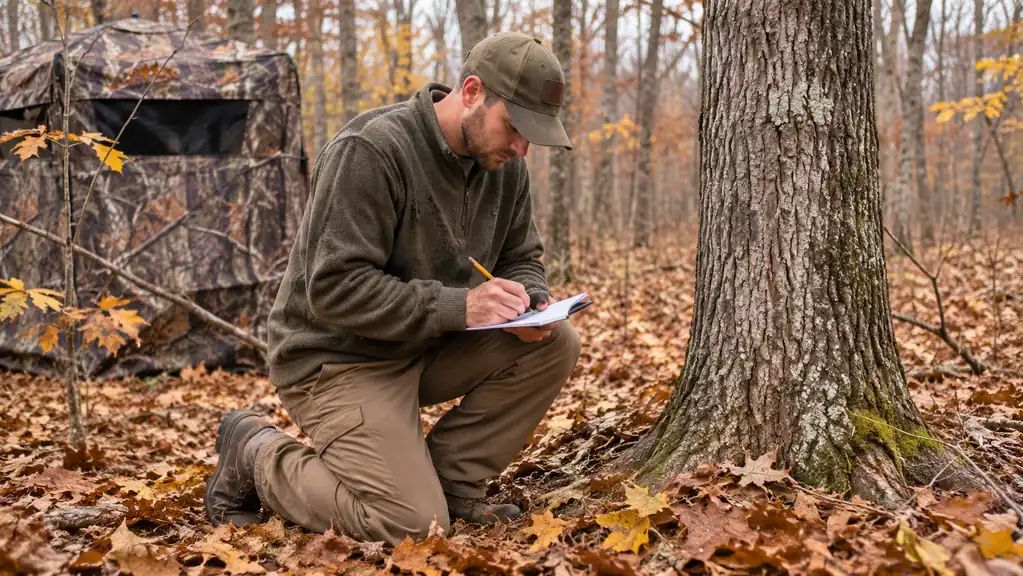
The best use of a rangefinder happens in September when there is nothing in the woods to spook. I walk to each stand, stand where I sit, and range everything that a deer might walk past. The big white oak at the edge of the gas line. The stone pile at the corner of the old fence. The three pines at the bottom of the hill. The stump that looks like a stump until it turns its head.
I write each one down in pencil on a card, tape it to the stand rail, and cover it with a strip of packing tape so the weather does not eat it. Mine reads like this: white oak edge, 34. Stone pile, 51. Three pines, 68. Fence corner, 62. Backside of the stump, 41. Then when a deer steps out at the fence line at gray light, I already know he is at 62 before I ever lift the unit. That card has saved me more deer than any piece of gear I own, because it buys me seconds I do not have to spend.
It is worth rechecking every single year. Trees grow, tops come down in a blow, and a lane that was open three seasons ago may be a brush pile now. I do the walk-through with the rangefinder in September, before archery opens, and I do it again if a storm takes anything down in October. Two Octobers back a wind event dropped a hemlock across my best lane on the lower stand, and the range card that had 44 written on the pines was suddenly a card about a tree that was not there anymore.
Step 5: Keep it dry, fed, and where your hand already is
A rangefinder that lives in the bottom of a pack is a rangefinder that is never there when you need it. Mine rides in the chest pocket of my jacket, on a short loop of cord I tied myself, with the carrying case in the truck for the walk in and out. I have had it out in rain and wet snow and it kept reading, which tracks with the IP54 rating the listing gives it. I would not test that by dropping it in the creek, but a wet morning is not going to end your hunt.
Batteries are the one thing that will strand you. The unit runs on a lithium battery and ships with one in the box, and I change mine at the start of every season whether it needs it or not. Two seasons back I sat a sixteen degree morning in the ladder stand and watched the display work slower than it ever had in September. It still read. It just took its time about it, and I was glad for the spare in my pocket. There is another in the console of the 2011 Ford F-150, which sounds like overkill until the morning it is not.
When something does go wrong, the AOFAR support window is two years, which is more than I expected at this price point and more than I have needed. I have not had a unit quit. The only thing that has worn out is the cord I tied to it, and I replaced that with a scrap of parachute cord.
What Else Helps
Wind decides more shots than yardage does. A rangefinder reading of 35 yards in an eight mile per hour crosswind is a different shot than the same 35 in still air, and the unit will never tell you that. I keep a piece of thread tied to the stand rail, which is as accurate as anything and costs nothing. Practice in the wind in the off season so you know what your arrow actually does when it is pushed.
Range everything, all the time, for a month. Mailboxes on the drive. The neighbor's barn. A groundhog at the edge of the field. The more you range, the better your eye gets, and the better your eye gets, the less you need the unit. That sounds backwards, but a hunter who can look at a deer and be within five yards is a hunter who uses the rangefinder as a check instead of a crutch.
And wear your harness in that ladder stand. I have climbed the same twenty feet for twenty-five years and I still clip in before my boots leave the ground. Ranging a deer is a fine way to forget where your feet are, and the number on the screen is not worth a fall. Do the ranging with your body settled and your tether set, every time, until it is a habit you do not think about. That is the only part of this I will get on a soapbox about.
Range him once, then hunt him instead of arithmetic
The AOFAR HX-700N gives you a number in a second, from 5 to 700 yards, at 6x, in a 180 gram body you will forget is in your pocket. Carrying case, battery, and a two year support window included.
Amazon Check the AOFAR HX-700N on Amazon →